

Fats for Baby & Toddlers

Updated: Aug 6
A complete guide to healthy fats for your baby's health and why it's important to include in their diet. Whether you're doing traditional baby led weaning or Indian baby led weaning - fats play a crucial role in infant brain development.

One of the biggest misconceptions I see during starting solids, baby-led weaning (BLW), and infant feeding is parents becoming afraid of fat.
But babies are actually supposed to eat fat. A LOT!
During the first two years of life, the brain grows more rapidly than at almost any other stage.
This is why healthy fats play such an important role in:
infant brain development
nervous system growth
hormone production
vitamin absorption
healthy weight gain
satiety and energy levels
In fact, according to pediatric nutrition research referenced by organizations like the American Academy of Pediatrics and the World Health Organization, dietary fat is critical during infancy because the developing brain is made up largely of fat.
This is especially important during:
starting solids at 6 months
the 6–12 month baby food stage
and the toddler years (1-5 years of age) when growth and development remain extremely rapid.
Whether you’re following:
baby-led weaning Indian food
traditional Indian baby feeding
spoon-feeding
or a mixed approach
healthy fats should absolutely be part of your baby’s meals.
And honestly? This is one area where I think social media has confused a lot of parents. Somewhere along the line, “healthy eating” became associated with low-fat eating, and that mindset has unfortunately spilled over into baby nutrition and toddler nutrition too.
But babies are not tiny adults. They burn a lot of energy growing so fast, so they need a lot of fats to sustain their little bodies!
Healthy fats help make food:
softer
easier to chew
more calorie-dense
more satisfying
easier to digest
more nutrient dense
which is especially helpful during:
appetite dips
picky eating phases
baby-led weaning texture progression
and periods where babies naturally eat smaller amounts (12 months to 24 months).
And if there’s one thing I always remind parents when it comes to infant nutrition, desi baby feeding, and healthy baby meals, it’s this: consistency over perfection. You do not need to perfectly balance every single meal. What matters most is repeatedly offering nourishing foods over time.
Why Healthy Fats Matter So Much During
Baby-Led Weaning
During infancy, babies need a surprisingly high percentage of calories from fat compared to adults.
Healthy fats support:
brain myelination
cognitive development
eye development
hormone function
absorption of vitamins A, D, E, and K
This is why many pediatric nutrition experts, like myself, emphasize including healthy fat sources in:
baby-led weaning recipes
Indian baby food recipes
healthy toddler meals
and everyday family meals.
For babies doing BLW Indian style or eating modified family foods, fats also help improve texture and softness. A little ghee in dal, yogurt with chia seeds, or coconut milk in curry can make meals easier for babies to manage while also increasing calorie density naturally.
And again — this does not need to look perfect every day. Some meals will be balanced. Some meals will be simple. Some meals will literally just be toast with nut butter and fruit. That’s okay. Consistency over perfection always matters more than chasing “perfect” baby meals online.
Vegetarian Healthy Fat Sources for Babies & Toddlers

1. Ghee
Let’s start with the obvious Desi staple. Ghee is one of the easiest healthy fats to include in:
Indian baby-led weaning recipes
desi baby food
baby-led weaning Indian meals
and toddler foods.
It adds softness, calories, and flavor without increasing meal volume too much, which is especially helpful for babies who naturally eat smaller portions.
A little ghee mixed into:
dal
khichdi
rice
roti
vegetables can make meals more satisfying while also helping babies absorb fat-soluble vitamins.
2. Butter
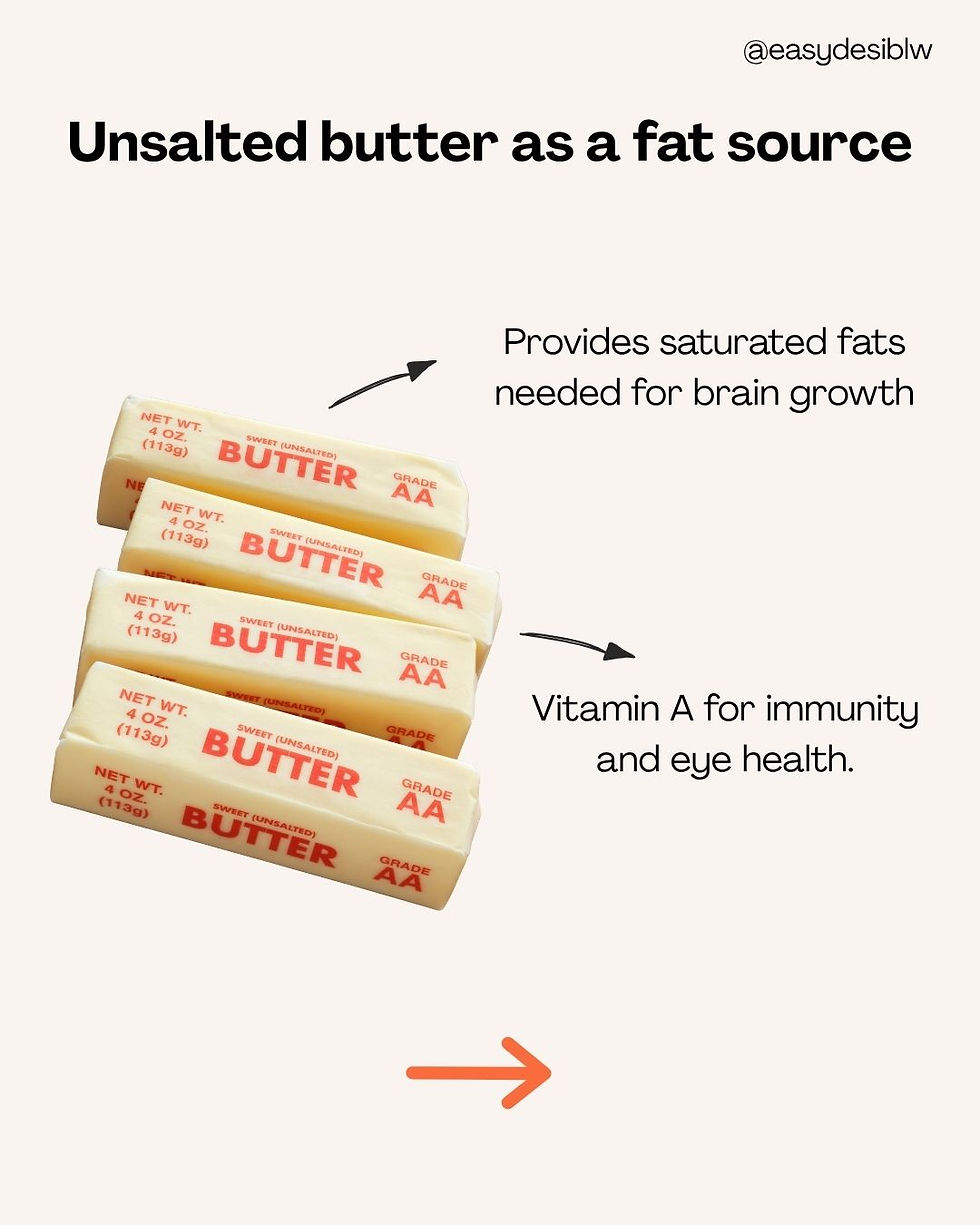
Butter is another simple and practical fat source during starting solids and baby-led weaning.
It works beautifully, melted into:
pasta
eggs
vegetables
toast strips
oatmeal
and helps soften textures for babies learning how to chew.
For babies and toddlers going through appetite dips, adding butter to meals is an easy way to increase calories without pressuring the child to eat larger quantities.
Note: For kids under 12 months try and choose unsalted butter.

3. Olive Oil
Olive oil is rich in monounsaturated fats and antioxidants and is commonly used in healthy baby meals and Mediterranean-style feeding approaches.
It works well:
drizzled over vegetables
stirred into soups
mixed into pasta
added to hummus or beans
You do not need large amounts — even small additions can enrich meals nutritionally.

4. Avocado
Avocado is honestly one of the easiest first foods for babies because it naturally combines:
healthy fats
fiber
softness
calories
Its texture makes it perfect for:
spoon-feeding
finger foods
and baby-led weaning.
Avocado can be served:
mashed
in wedges
spread on toast
mixed into yogurt
and because it’s naturally calorie-dense, it’s especially useful for babies who eat smaller meals.

5. Full-Fat Yogurt
Full-fat yogurt provides:
fat
protein
calcium
probiotics
all in one food.
It’s also one of the easiest ways to introduce dairy during the allergen introduction window between 6–8 months.
Plain yogurt pairs beautifully with:
fruit
oats
chia seeds
nut powders
savory Indian meals like khichdi or pulao.

6. Nut Butters
Nut butters are allergens and should be introduced one at a time, mindfully.
Once allergens are safely introduced, nut butters become one of the best additions to:
baby-led weaning meal ideas
high-calorie baby foods
and healthy toddler snacks.
Peanut butter, almond butter, and cashew butter provide:
healthy fats
protein
calories
minerals
while also helping meals feel more filling and balanced.

7. Cheese
Cheese can and should absolutely be part of a balanced desi baby feeding diet. It's also a part of toddler nutrition, especially since they love surviving on air and water, haha!
It provides:
fat
protein
calcium
and works well:
melted into eggs
added into sandwiches
served in thin strips for self-feeding.
The key is moderation and choosing lower-sodium options whenever possible.

8. Coconut Oil
Coconut oil is commonly used across:
Indian cooking
Southeast Asian cooking
tropical cuisines worldwide
and works really well in Indian baby food recipes.
It contains medium-chain triglycerides (MCTs), which are relatively easy to digest and provide quick energy.

9. Full-Fat Cream (or Malai)
If you grew up in an Indian household, malai was probably already part of everyday meals.
Adding small amounts into:
dal
soups
porridge
khichdi
can help increase calorie density naturally for babies and toddlers.

10. Flaxseed Oil
Flaxseed oil is rich in plant-based omega-3 fatty acids that support brain and nervous system development.
It should always be used cold, never heated.
Tiny amounts can be mixed into:
yogurt
oatmeal
smoothies
mashed vegetables.

11. Cold-Pressed Sesame Oil (Til Oil)
Sesame oil is widely used in desi baby food and Asian cooking.
Once sesame has been introduced safely as an allergen, small amounts of cold-pressed sesame oil can add:
healthy fats
antioxidants
flavor exposure.

12. Tahini
Tahini is honestly one of the most underrated foods in baby-led weaning Indian recipes.
It’s rich in:
healthy fats
iron
calcium
calories
and blends beautifully into:
yogurt
oatmeal
sauces
spreads.

13. Chia Seeds
When soaked properly, chia seeds provide:
omega-3 fats
fiber
hydration support
and work especially well in:
breakfast bowls
yogurt
oatmeal
puddings.

14. Sunflower Seed Butter
For families navigating nut allergies or daycare restrictions, sunflower seed butter is an excellent option.
It still provides:
healthy fats
calories
vitamin E
while remaining nut-free.

16. Coconut Milk
Coconut milk adds richness, softness, and healthy fats to:
curries
soups
dals
rice dishes
while also making textures easier for babies during baby-led weaning.

17. Poppy Seeds (Khus Khus)
Poppy seeds are commonly used in Indian cooking and can be introduced in very small amounts once soaked and ground properly.
They add:
fats
minerals
texture variety
and work beautifully in:
kheer
porridges
dals
Non-Vegetarian Healthy Fat Sources for Babies & Toddlers
Non-vegetarian foods are honestly some of the easiest ways to naturally combine:
healthy fats
iron
protein
zinc
omega-3 fats
calories
all in one food.
And if you think about it, a lot of traditional foods across:
Indian cooking
Asian cooking
Mediterranean diets
and global family meals
already naturally include many of these fat-rich foods.
You do not need fancy imported “superfoods” to support good infant nutrition. A simple fish curry, soft shredded chicken, egg yolk mixed into rice, or slow-cooked lamb can honestly do a lot.

1. Salmon
If I had to pick one of the best foods for baby brain development, salmon would probably be near the top.
Salmon is rich in:
omega-3 fatty acids
DHA
protein
vitamin D
healthy fats
and omega-3 fats are especially important during infancy because they support brain and nervous system development.
Salmon is often recommended in a variety of contexts when it comes to feeding little ones. It’s also a go-to for healthy baby meals, thanks to its rich nutrients that support growth and development.
Plus its loaded with omega-3 fatty acids, which are great for brain development especially when just starting solids when intake is low. And let’s not forget toddler nutrition, where salmon can be a tasty and nutritious option for those picky eaters. Overall, it’s a fantastic choice for little ones at different stages of baby led weaning!
For babies, salmon should always be fully cooked and carefully deboned. I personally like flaking it into:
rice
khichdi
pasta
mashed sweet potato
soft fish cakes.
And honestly, don’t stress if your baby only takes a few bites at first. With fish especially, repeated exposure matters way more than immediate acceptance. Consistency over perfection always wins here.

2. Egg Yolks & Whole Eggs
Eggs are honestly one of the easiest nutrient-dense foods you can give babies.
They contain:
healthy fats
choline
protein
iron
vitamin D and choline is especially important for brain development and memory.
One thing I love about eggs is how versatile they are! You can do:
omelets
stir frys for older toddlers
egg paratha (my son's favorite)
And if you’re doing baby-led weaning, eggs are also great for practicing self-feeding because the texture is naturally soft.
A lot of parents still get outdated advice about delaying eggs, especially in Indian households, but current research around allergen introduction actually supports introducing eggs earlier, starting at 6 months rather than waiting unnecessarily. The later you introduce allergens, the more likely your child is to develop an allergy.

3. Mackerel (Bangda)
Mackerel is honestly one of my favorite fish options for Indian baby-led weaning recipes because it’s:
affordable
flavorful
naturally fatty
rich in omega-3s.
It’s one of those foods that gives you a lot nutritionally without needing a huge quantity.
Mackerel supports:
brain development
eye development
healthy fat intake
nervous system growth
which makes it an excellent option during the 6–12 month baby feeding stage and beyond.
Just make sure it’s:
fully cooked
deboned carefully
mashed well before serving.

4. Chicken Thighs
Chicken thighs are so underrated for babies.
Most parents default to chicken breast because they think “leaner = healthier,” but honestly, chicken thighs are usually much better for babies because they contain more fat.
That extra fat makes the meat:
softer
juicier
easier to shred
easier to chew.
This is especially important during baby-led weaning, when babies are still figuring out how to move food around in their mouth.
Chicken thighs also contain:
protein
iron
zinc
B vitamins
and work beautifully in:
curries
shredded chicken rice
pasta dishes
khichdi.

5. Lamb (Mutton)
Lamb is one of the most nutrient-dense meats you can offer babies and toddlers.
It naturally contains:
healthy fats
heme iron
zinc
B12
protein.
This is especially useful for babies who:
naturally eat smaller portions
are going through picky phases
need more iron-rich foods.
Slow-cooked lamb or minced mutton works really well because it becomes soft and easy to mix into:
rice
dal
mashed vegetables
pasta sauces.
And honestly, traditional desi baby food already includes so many lamb and mutton dishes that can easily be modified for babies.
6. Chicken Liver
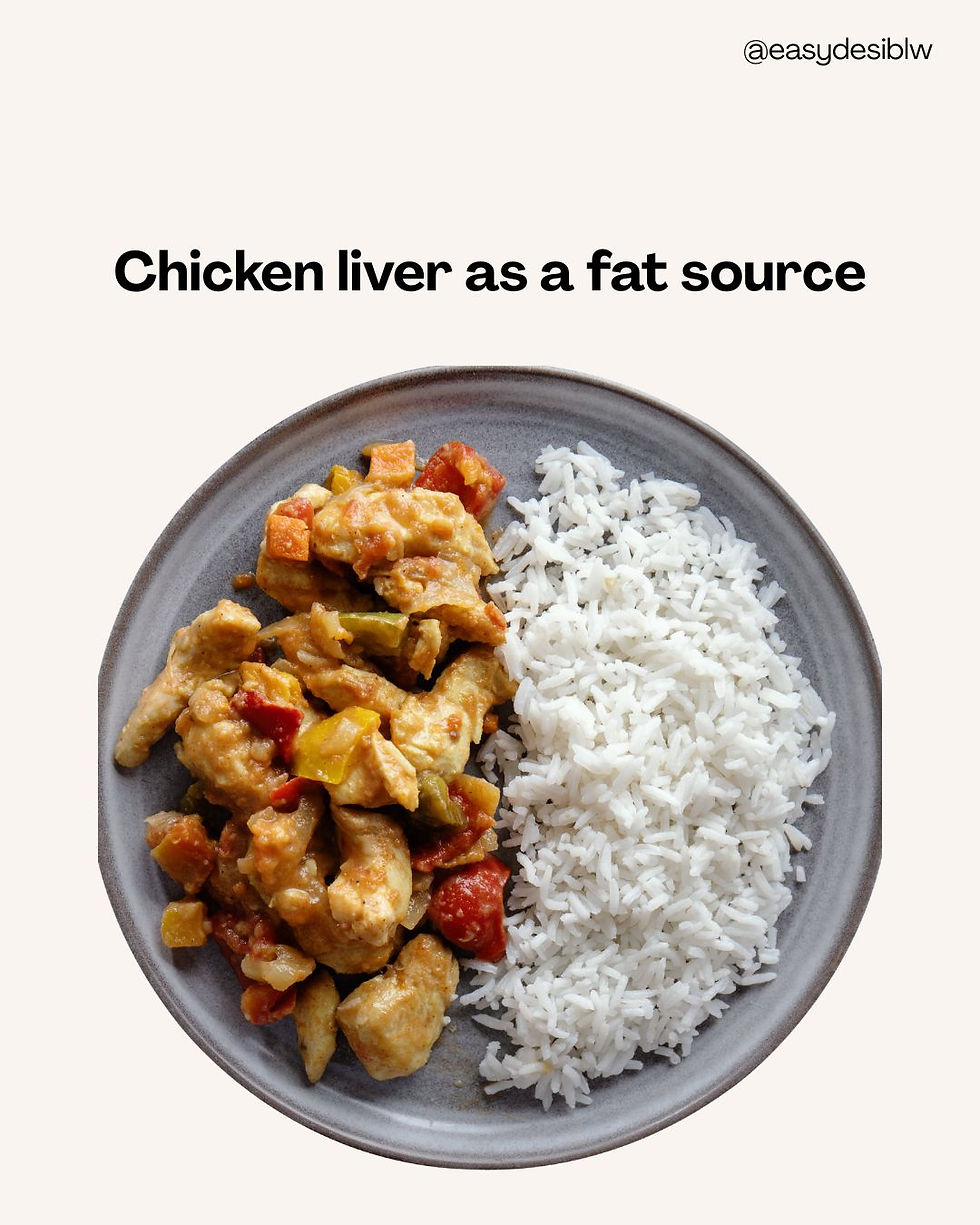
I know liver sounds intimidating to a lot of parents, but nutritionally, it’s honestly one of the most powerful foods you can offer in small amounts.
Chicken liver is incredibly rich in:
iron
vitamin A
healthy fats
folate
B12.
Because babies’ iron stores naturally begin dropping around 6 months, iron-rich foods become really important during starting solids.
You do not need large quantities here. Small amounts once in a while are more than enough.

7. Turkey (Dark Meat)
Dark turkey meat contains more fat and flavor than lean white meat, which makes it softer and easier for babies to manage.
Ground turkey works really well in:
meatballs
patties
pasta sauces
rice bowls.
And because it stays relatively soft, it’s a great option for:
self-feeding
texture progression
toddler meals.

8. Mutton, Beef or Chicken Bone Broth
Despite the hype, bone broth is not magical, but it can absolutely be nourishing.
It naturally contains:
fats
collagen
gelatin
minerals
and works really well in:
soups
khichdi
rice dishes
lentils.
This is especially helpful during:
teething
sickness
constipation phases
appetite dips.
And honestly, sometimes the simplest foods end up being the most comforting and nourishing. You do not need elaborate meal plans to support healthy infant nutrition.

9. Duck
Duck is naturally much fattier than chicken, which makes it:
softer
richer
more calorie-dense.
When cooked slowly and shredded well, it becomes really easy for babies and toddlers to eat.
Duck is especially useful for:
babies with smaller appetites
toddlers needing higher-calorie meals
families wanting more variety in protein sources.

10. Fish or Chicken Curry with Coconut Milk
Honestly, this is one of my favorite examples of how family meals can absolutely work for babies.
The coconut milk adds:
healthy fats
creaminess
calories
while the fish or chicken becomes soft and easy to mash into:
rice
dosa
idiyappam
quinoa
vegetables.
And this is really what baby-led weaning Indian food should feel like in my opinion — not separate “baby food,” but thoughtful modifications of real family meals.
Again, it doesn’t need to look Pinterest-perfect every single day. Consistency over perfection matters so much more than aesthetic plates or fancy recipes.
One thing I always remind parents is that feeding babies and toddlers is rarely just about one ingredient or one “perfect” meal. It’s about looking at the bigger picture — growth, nourishment, meal balance, texture progression, iron intake, healthy fats, self-feeding skills, appetite changes, and creating realistic routines that actually work for your family.
That’s exactly what I help parents with through my consultations.
Whether you’re navigating:
starting solids at 6 months
baby-led weaning
picky eating
weight gain concerns
meal planning
balanced plate ideas
allergen introduction
constipation
toddler meal routines
or simply figuring out what to feed your child day-to-day without feeling overwhelmed
I help create practical, evidence-based strategies that work with your family’s culture, lifestyle, and food preferences — especially for Indian and Desi households trying to balance traditional foods with modern infant nutrition recommendations.
And honestly, sometimes parents don’t need a rigid meal plan. They just need clarity, reassurance, realistic guidance, and someone to help connect all the pieces together in a way that feels sustainable long term.
Because healthy feeding doesn’t come from making perfect meals every day. It comes from repeatedly offering nourishing foods, building confidence slowly, and staying consistent over time — even on the messy days.
If you need a personalized consultation then book a slot here, I'm happy to help!


