

The Complete Guide to Starting Solids for Baby (Everything You Need to Know!)

Updated: Aug 6
Starting solids is one of the most exciting milestones in your baby's first year — and honestly, one of the most overwhelming. There is so much conflicting information out there.
Your mother-in-law says one thing, your paediatrician says another, and Instagram says something else entirely.
So let's cut through the noise.
This is the only starting solids guide you'll need. It covers everything — when to start, what to feed, how much, how often, water, iron, protein, allergens, salt, constipation, utensils, cups, self-feeding, and even how sleep connects to all of it!
I've linked each section to a detailed guide so you can go deeper on any topic that feels relevant to where you are right now. Now take a deep breath and let's go!
Bookmark this. Share it with your partner. Send it to your mother-in-law. Let's do this together!
Table of Contents
1. When Should I Start Solids? Signs of Readiness
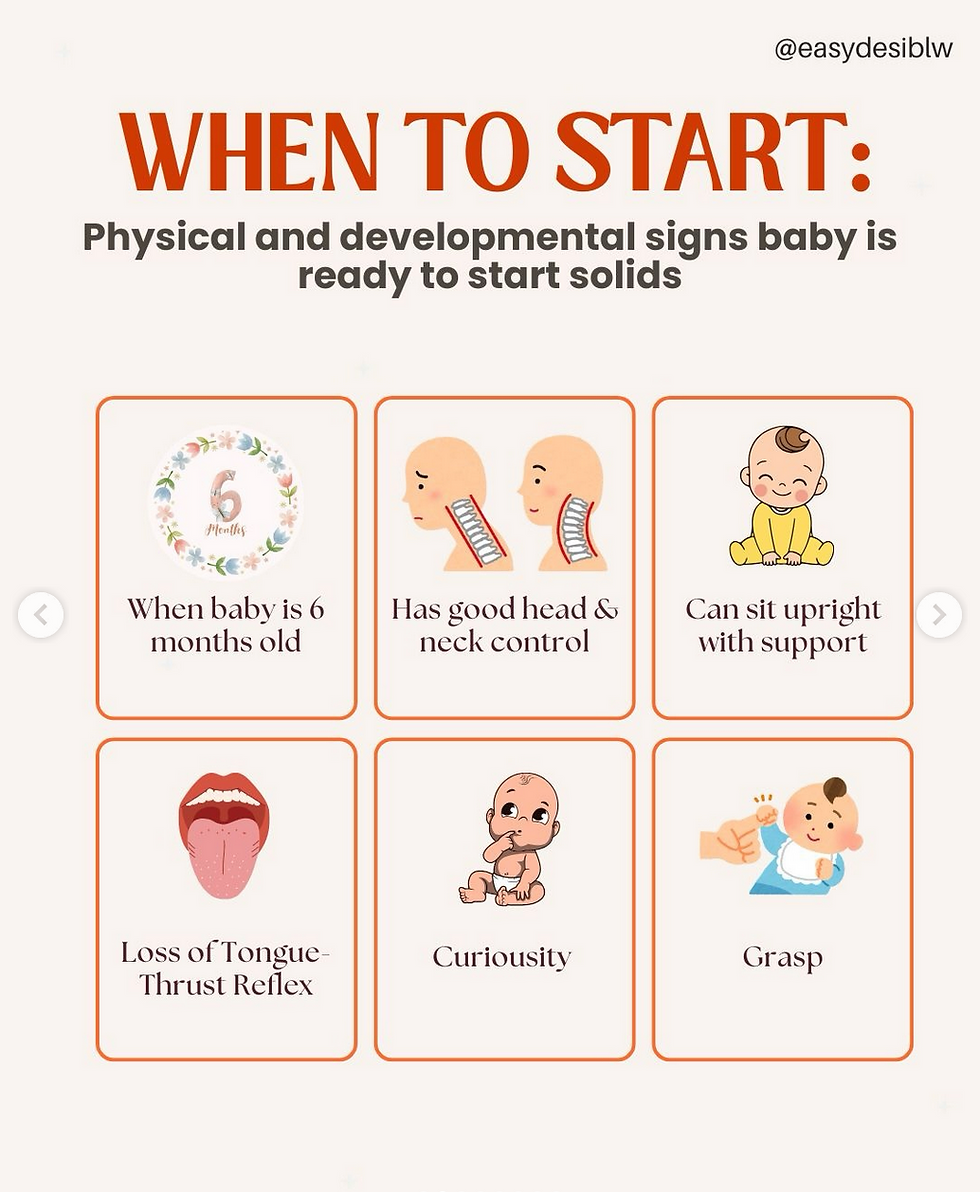
The World Health Organization (WHO), the American Academy of Pediatrics (AAP), and the Indian Academy of Pediatrics (IAP) all recommend starting solids at around 6 months — not 4 months, not when your baby grabs your food, not when your mother-in-law says so.
But the calendar is only part of the picture. Your baby also needs to show these three signs of developmental readiness:
They can sit up with minimal support. Your baby doesn't need to sit completely independently, but they should be able to hold their head steady and upright. This is critical for safe swallowing.
They've lost the tongue-thrust reflex. This is the reflex that causes babies to automatically push things out of their mouths. If you try to offer food and your baby immediately pushes it out with their tongue, they're not quite ready yet.
They're showing interest in food. Watching you eat, reaching for your plate, opening their mouth when food comes near — these are all signs your baby is curious and ready to explore.
One thing worth clearing up: grabbing at your food at 4 or 5 months is not a sign of readiness for solids. It's a sign of normal motor development. Babies grab at everything at this age. The three signs above are what actually matter.
A note for Indian families: Starting solids at 4 months was common advice a generation ago and is still passed down in many households. But current evidence is clear — starting too early puts unnecessary strain on your baby's digestive system and kidneys, and increases the risk of allergies and obesity later in life. Six months is the recommendation, and it's worth holding the line on this one.
2. Purées vs Finger Foods:
What's the Difference and Which Should You Choose?
This is probably the question I get asked most often, and the answer is refreshingly simple: you don't have to choose!
Let's bust the biggest myth first.
Fiction: You have to start with purées before moving to finger foods. Fact: You can start directly with finger foods from day one.
Chewing is a motor skill — just like walking or crawling. The more babies practice it, the better they get. There is no developmental reason to start with purées first.
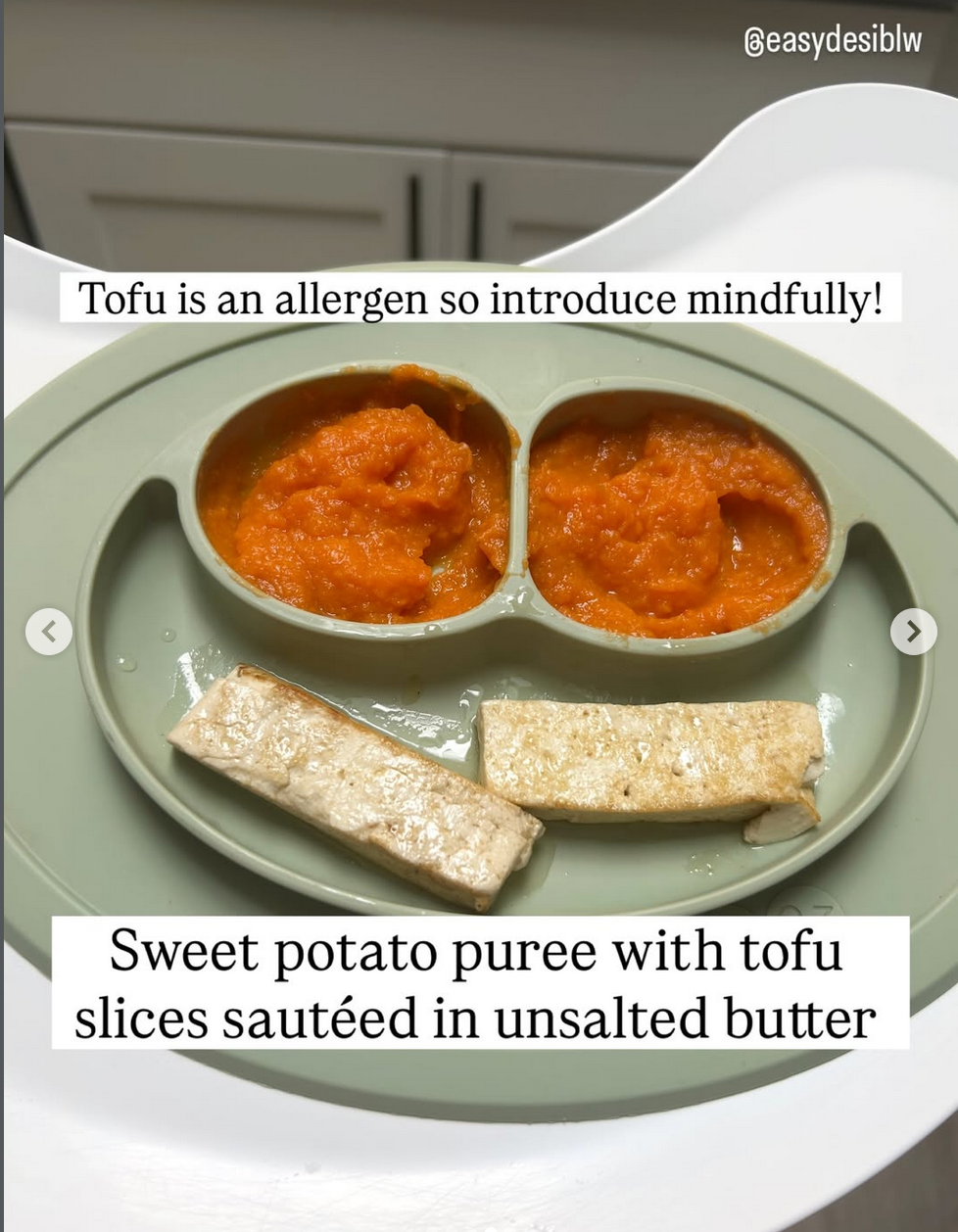
You can begin with soft, squishable finger foods and introduce mashed or puréed textures alongside them at the same time like this:
Here's something really interesting about how babies learn to chew: when thicker foods or soft solids touch their tongue, it activates what's called the tongue lateralization reflex — this helps them move food side to side and eventually chew safely.
Purées, on the other hand, use the same suck-and-swallow motion as milk, so the tongue doesn't get that workout. The earlier you introduce lumpier textures (that still pass the squish test!), the stronger and more confident your baby's chewing skills become.
What is the squish test?
Press the food between your thumb and index finger. If it squishes easily, it's safe for your baby. If it doesn't, it needs to be cooked longer, cut differently, or saved for later. Here's a video explaining it in more detail:
What about gagging?
Gagging is completely normal and is actually a protective reflex. Babies gag to learn how to control food in their mouth, protect their airways, and safely move food around. It is part of learning, not a sign to stop.
Choking is different — choking is silent, whereas gagging is loud. If your baby is making noise, they are working it out. Stay calm, let them work through it, and resist the urge to intervene immediately.
3. How to Introduce Finger Foods:
Start with Pre-loaded Spoons
If full baby-led weaning feels overwhelming, pre-loaded spoons are the way to go. Not a shortcut, not cheating, and definitely not doing it wrong.
A pre-loaded spoon is exactly what it sounds like — you load the spoon with food and hand it to your baby to bring to their mouth. Your baby stays in control, you get peace of mind. It is one of the easiest ways to transition from purées to textures to finger foods without pressure.
Watch this video to see what I mean:
Why pre-loaded spoons work so well:
Builds independence without overwhelm
Supports hand-to-mouth coordination
Reduces choking anxiety for parents
Encourages self-feeding from day one
Easy foods to offer on a preloaded spoon:
Plain full-fat yogurt or curd
Dal and rice mash (soft, not watery)
Mashed banana, pear, avocado, or stewed apple
Pancake smashed into yoghurt
Let your baby explore for the first 5–10 minutes of every meal. Yes, it will be messy. That is learning. Baby-led weaning doesn't mean no help — it means supporting independence at your baby's pace.
4. How Much Should My Baby Eat?
A Realistic Guide Age by Age
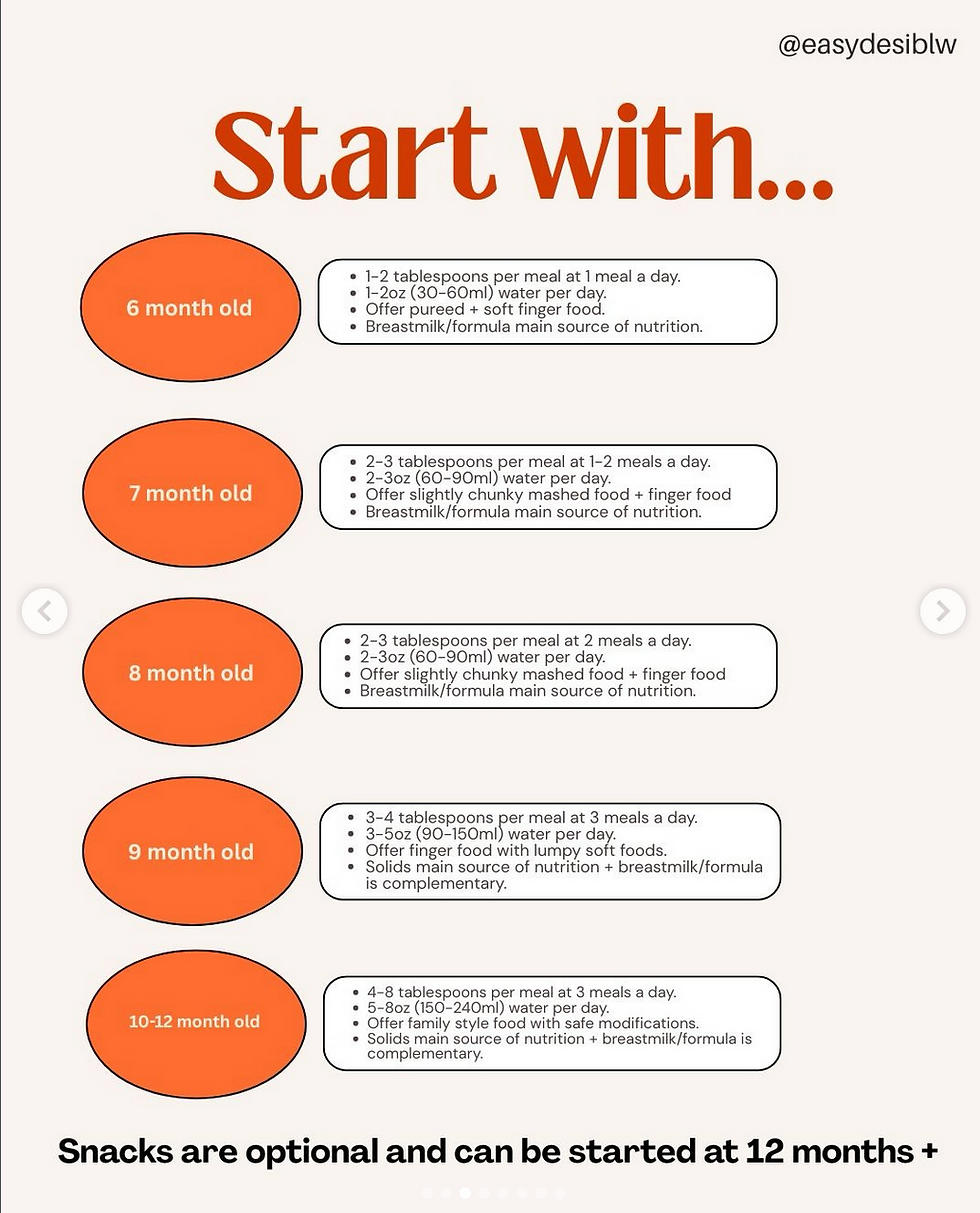
Here's the truth: there is no one-size-fits-all answer. Every baby's appetite, growth, and development are unique. What I'm sharing here is a guideline, not a prescription.
Always tune into your baby's hunger and fullness cues — that is called responsive feeding, and it matters more than hitting any specific number.
According to the WHO and the AAP (American Academy of Paediatrics), solids for ages 6–12 months are about exploration, learning, and nutrient exposure — not quantity.
Breast milk or formula remains the primary source of nutrition for the entire first year. Even if your baby only eats a few bites at a sitting, that is completely okay — what matters is that those bites are nutrient-dense and offered consistently.
The goal at this stage isn't to perfectly hit a number of meals every day. It's to gently guide your baby toward family foods, encourage self-feeding, and help them build a positive relationship with food.
Here is a sample feeding and sleeping schedule for a 6-7 month old baby.
How many meals does my Baby need by Age
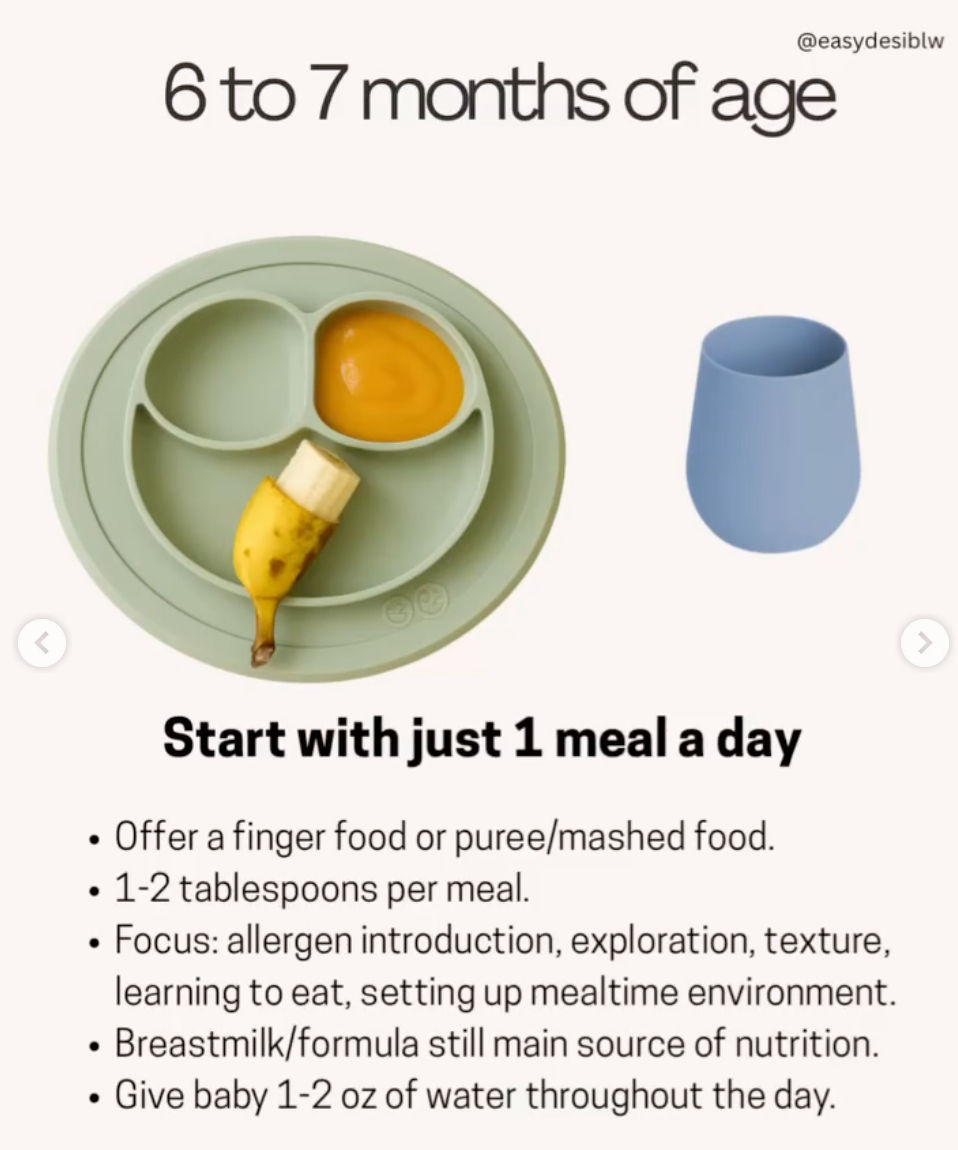
6–7 months: 1 meal per day + a few sips of water.
Focus on exploration and getting used to textures. Milk (breast or formula) is still the main source of nutrition.
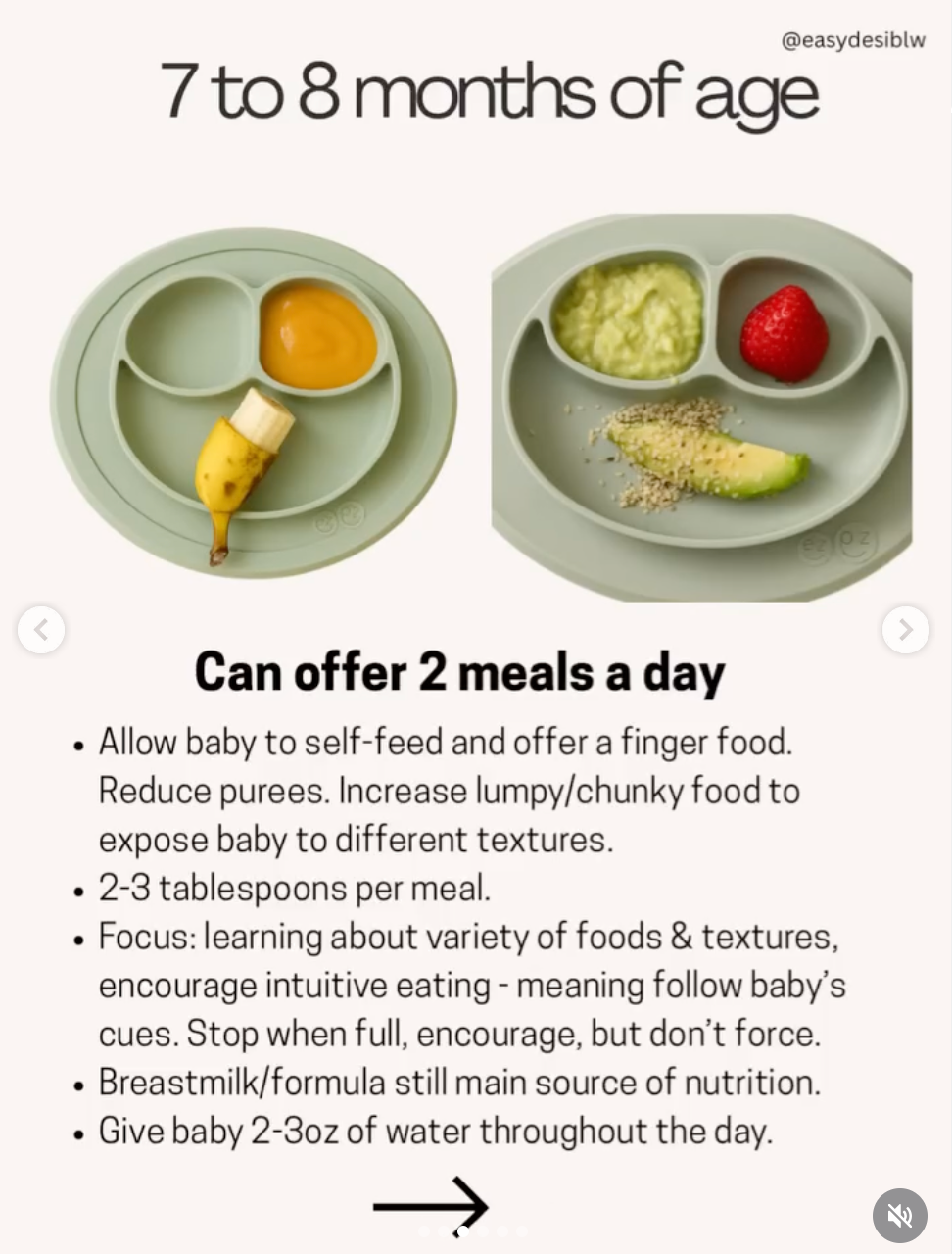
7–8 months: 2 meals per day + a few sips of water at every meal.
Your baby is getting more coordinated and interested. Start offering a wider variety of foods, textures, and flavours.

8–10 months: 2–3 meals per day + a few sips of water.
Iron-rich foods should be present at every meal. Finger foods, soft family foods, and self-feeding practice are all happening now.

10–12 months: 3 meals a day + a few sips of water.
Your baby is moving toward eating with the family. Continue offering a wide variety of textures, flavours, and food groups.
12 months+: 3 meals + 2 snacks (optional) per day + few sips of water.
You can also start transitioning to whole cow's milk. The transition to full family foods continues.
Meal Ideas by Age
Here are some meal ideas for 6-7 month olds: Click here
Meal ideas for 8-9 month olds: Click here
Meal ideas for 9-12 month olds and older: Click here
6. The Iron Guide — Why It Matters After 6 Months

Iron is the nutrient I talk about more than almost any other when it comes to starting solids — and for good reason.
By 6 months, your baby's natural iron stores from birth begin to run low. Iron is critical for:
Brain development and cognition
Energy and healthy red blood cells
A strong immune system
The problem is that iron deficiency is incredibly common — especially in India, and especially in vegetarian households — and it often goes undetected because the signs are subtle.
Signs your child is low in iron: Pale skin, fatigue, slow weight gain, and developmental delays can all be signs of low iron, but they're easy to miss or attribute to something else.
What the guidelines say about Iron
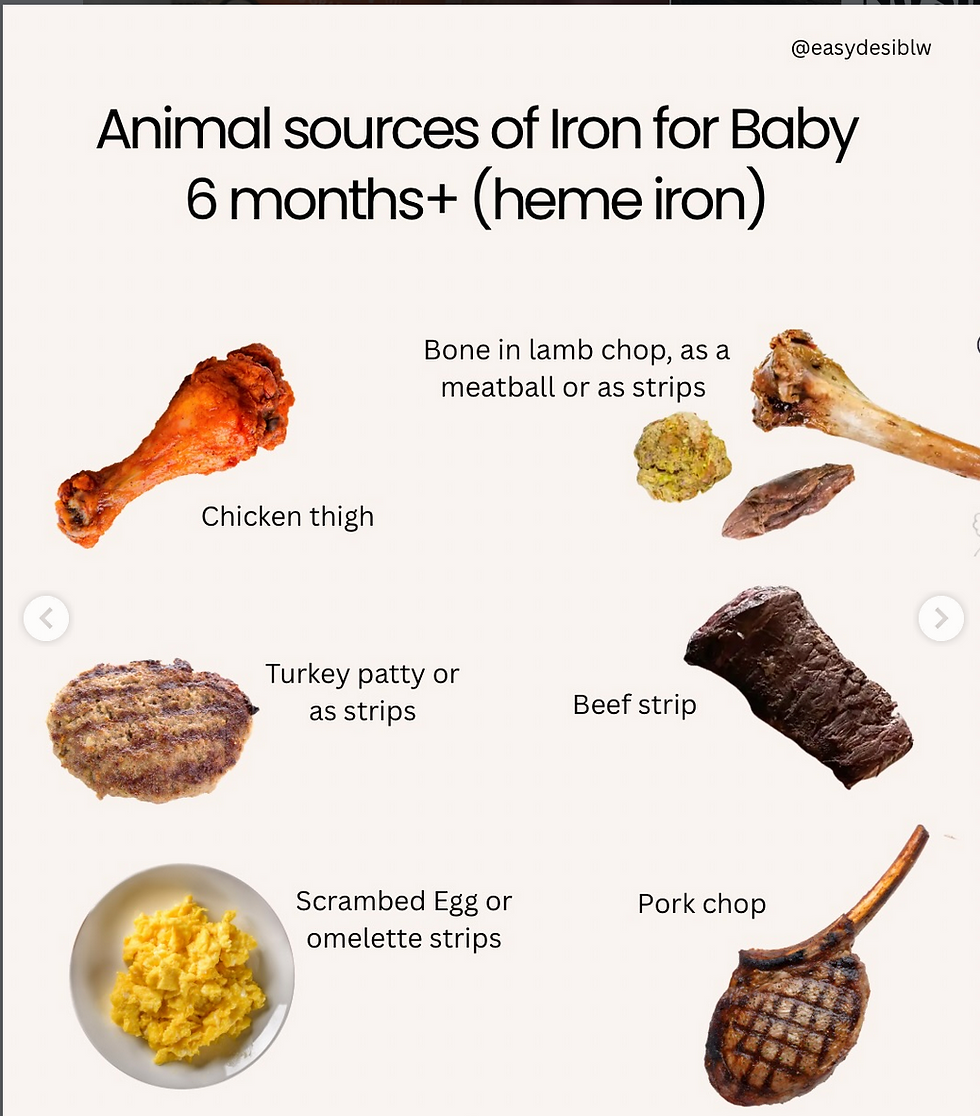
American Academy of Pediatrics (USA): Babies need around 11mg of iron per day from 6–12 months. Exclusively breastfed babies may need iron drops since breast milk alone doesn't cover needs once solids begin.
Indian Academy of Pediatrics (India): Recommends iron drops for all babies starting solids, regardless of diet, since anaemia is widespread — particularly in vegetarian households.
As a nutritionist I always recommend getting an annual blood test done for your child to check for iron levels, Vit. D levels, a full CBC (complete blood count) panel. This will give you a good idea about the overall health of your child. If there are any deficiencies they can be caught early and treated appropriately.
The practical takeaway: aim to offer an iron-rich food at every single meal once solids start. It won't be perfect every time, and that's okay — the key is variety and consistency.

One important tip: Pair iron-rich foods with Vitamin C to boost absorption. A squeeze of lemon on dal, orange segments alongside eggs, or tomatoes in khichdi all make a real difference!
7. The Protein Guide — What Parents Actually Need to Know

Here's something that might surprise you: most babies and young children already get enough protein.
The internet will have you believe otherwise. But the reality is that breast milk or formula, combined with everyday foods like dal, yoghurt, eggs, and grains, covers protein needs for the vast majority of babies. Up until about 4–5 years of age, protein intake is usually not the concern.
What tends to get missed instead? Iron and fibre.
While everyone is focused on protein, these two nutrients quietly impact growth, digestion, and overall health far more than a protein shortfall does.
That said, protein absolutely matters — it's just about quality and variety, not hitting a specific number.
A balanced approach looks like:
Plant proteins: daal, beans, lentils, tofu, nuts, seeds
Animal proteins: eggs, chicken, fish, dairy
Unless you're vegetarian, including both helps ensure a complete amino acid profile.
As children grow into later childhood and puberty, protein needs do increase — but for babies and toddlers, you don't need to stress about hitting a number. You need to focus on balanced meals.
And protein powders, supplements, mixes? Not necessary for most babies and toddlers. I only recommend starting this closer to puberty since that's when most kids fall behind in protein consumption. If you're the parents of a pre-teen or teen and don't know how to supplement their iron and protein intake, then please get in touch for a personalized consultation here.
8. The Water Guide — When, How Much and How to Serve It

Once your baby starts solids at around 6 months, small sips of water at each meal are encouraged — not because they suddenly need a lot, but because solids increase fibre intake, which means hydration matters more.
Constipation at this age is normal!
How much water does my baby need?

0-6 months: No water needed, only breastmilk or formula!
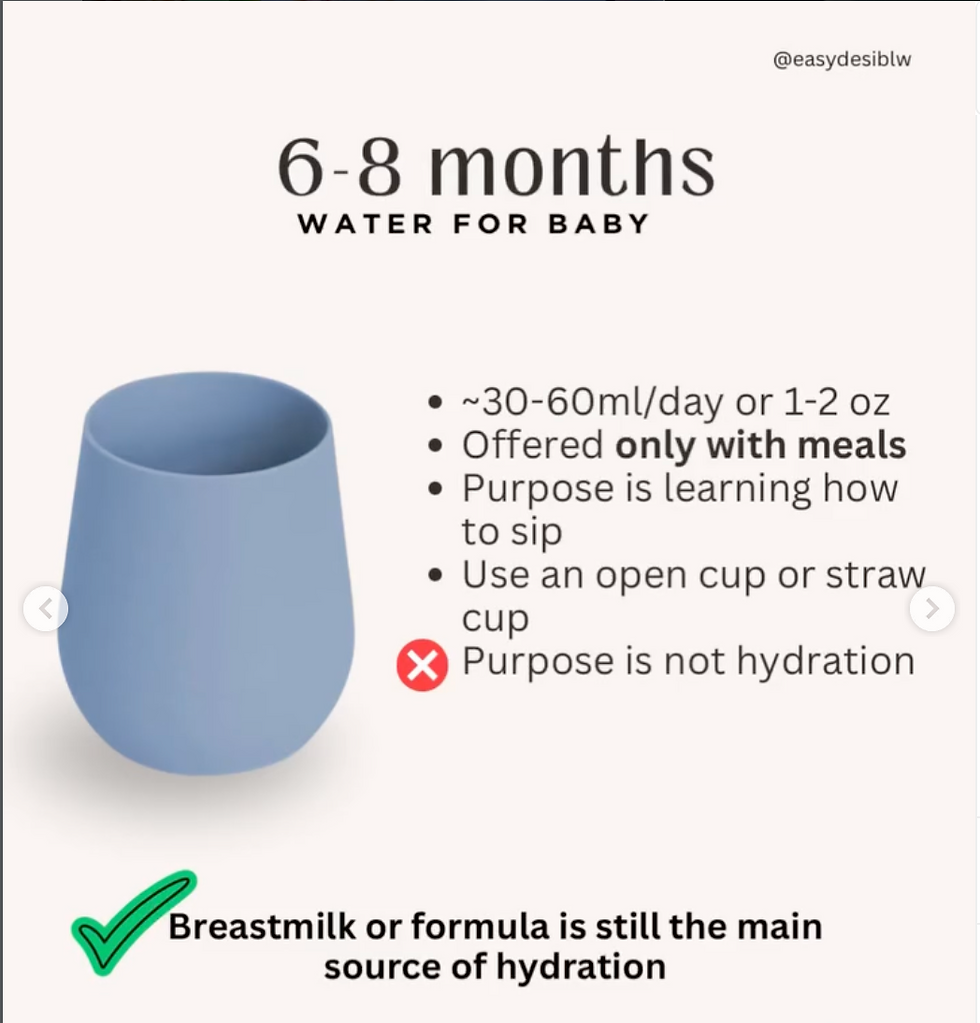
6–8 months: 1–2oz (30–60ml) per day, offered in small sips
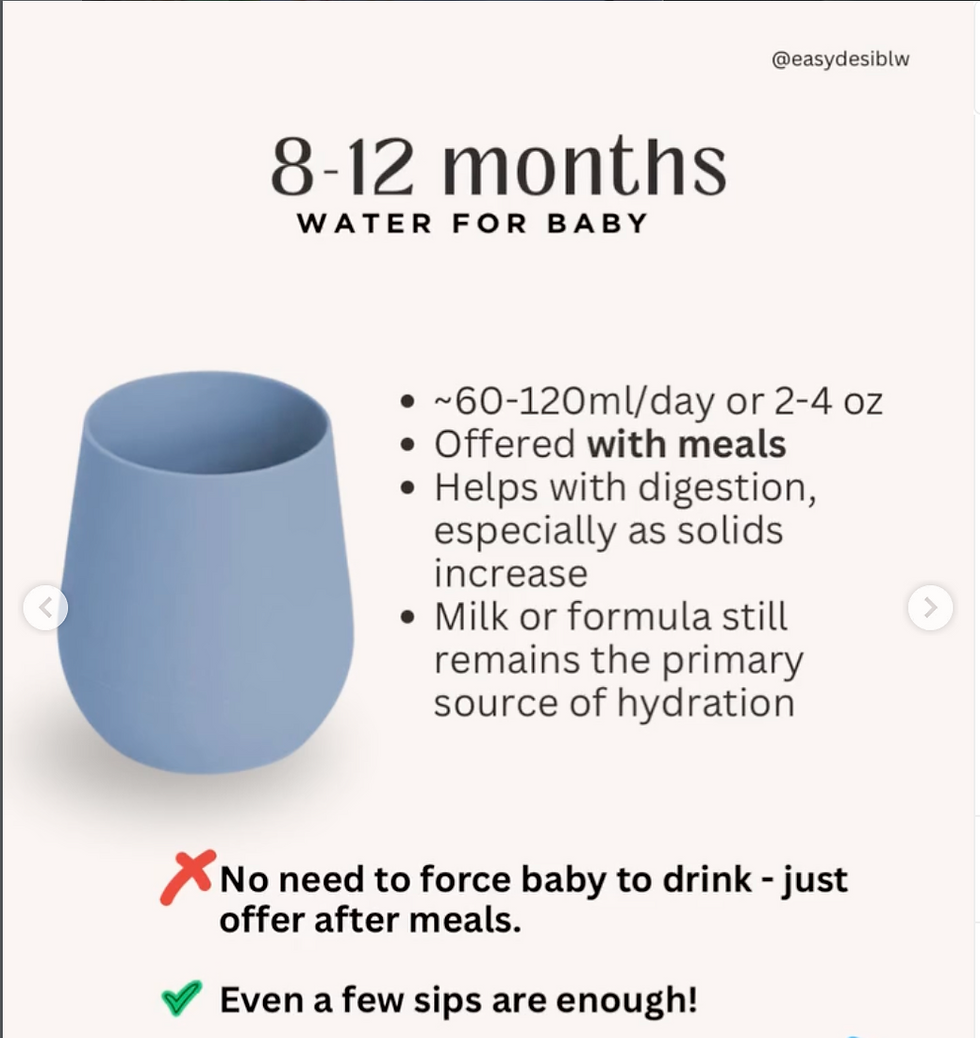
8–12 months: 2–4 oz (60–120ml) per day
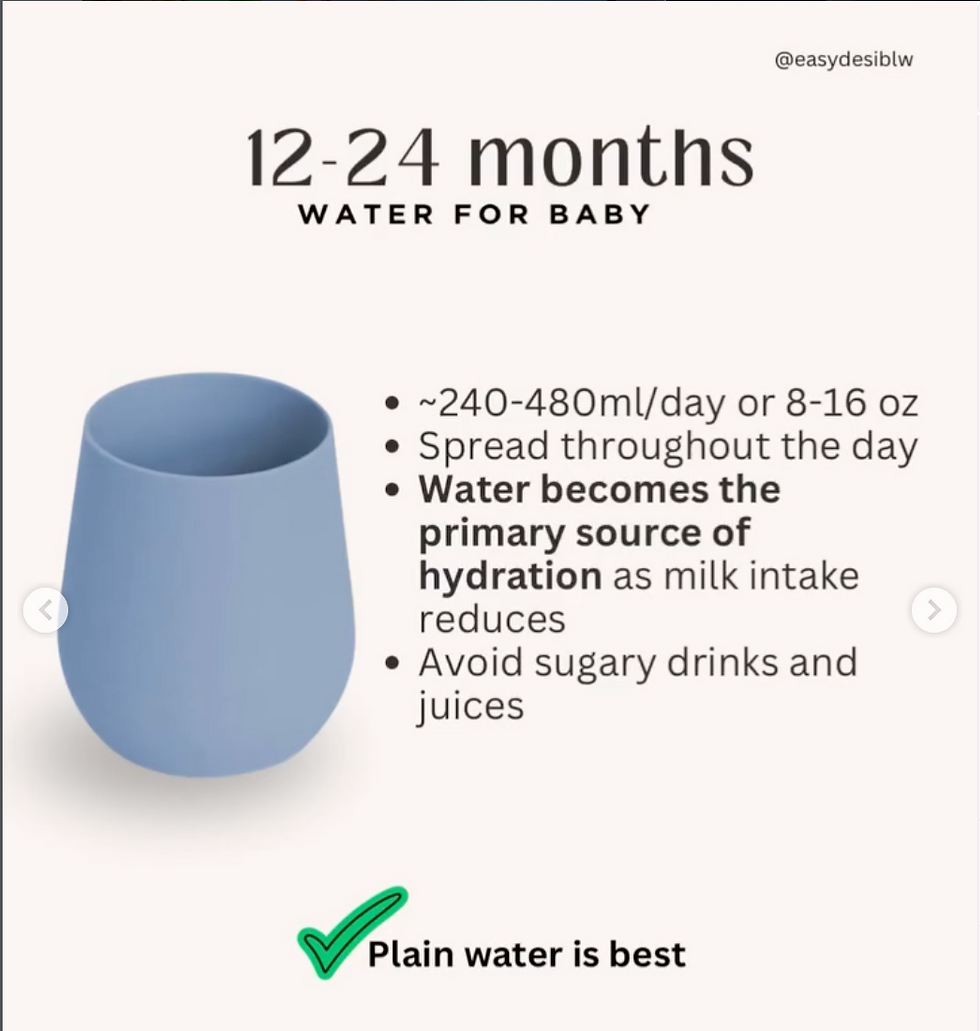
12 months+: 8–16 oz per day, gradually increasing based on activity level and climate.
For children under 12 months, breast milk or formula is still the primary drink. Water is supplementary.
The key thing to remember: hydration doesn't just come from water. It also comes from fruits, vegetables, soups, and breastmilk, formula or dairy (after 12 months of age). On days when your baby refuses water, hydrating foods are your best friend.
If Your Baby Won't Drink Water — Try These Hydrating Foods
Babies under 12 months don't need big gulps of water — too much can actually fill them up and leave less room for nutrition. On hot days, teething days, or sick days when appetite is low, hydrating foods are a brilliant alternative:

Serve as finger foods, blend into purées, freeze for teething relief, or mix into oatmeal or yogurt.
What to avoid under 24 months:
Flavoured or sparkling water (sugar and chemicals)
Juices (contain sugar and preservatives, additives)
Soda and cold drinks (sugar, preservatives, chemicals, additives)
Sweetened drinks of any kind (sugar, preservatives, chemicals, additives)
There is simply no need for any of these in the first two years. Water is simple, neutral, and effective. Building the habit early makes a real difference.
9. How to Choose Your Baby's First Cup

I get this question a lot! And yes - there are so many different types of cups, bottles and straw cups out there, so it can get confusing.
But this is what you should know about the three main types of cups and how to choose the best one for your child.
My favorite and the one I recommend first is an open cup!
Yes, it’s messy.
Yes, they’ll spill.
But that’s exactly how they learn!
Open cups help babies develop mature drinking skills by encouraging proper lip closure, tongue movement, jaw stability, and oral motor development. These are the same muscles they’ll use later for chewing, drinking, and even speech.
I also recommend introducing a straw cup around the same time. Straw cups are a great alternative when you’re on the go and also support healthy oral motor development.
I don’t recommend prolonged use of sippy cups. While they’re not “bad,” relying on them for too long can delay the transition to more mature drinking patterns. This is one of the reasons the AAP recommends transitioning away from bottles by 12–18 months and encouraging cup drinking early.
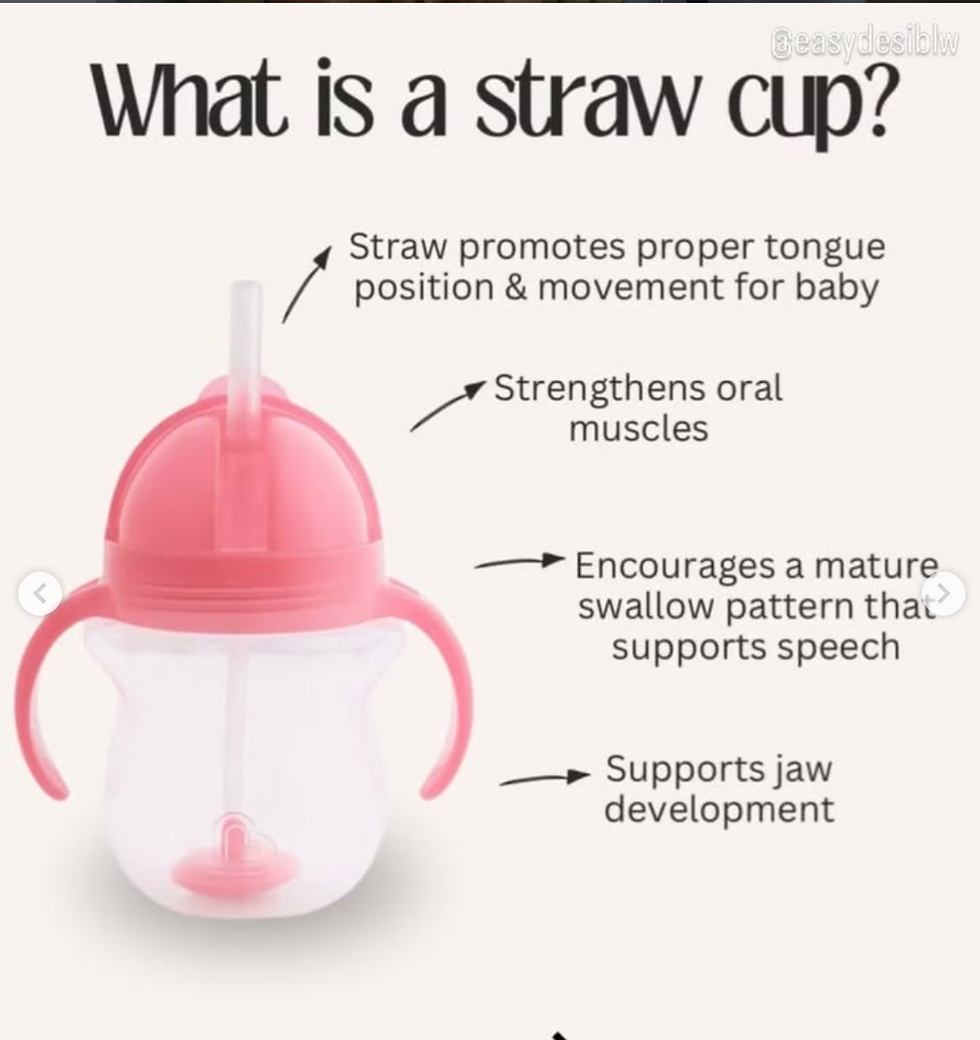
Straw cup: A great second option. Builds lip, cheek, and tongue strength — all important for speech development and chewing. Introduce around 6–9 months alongside the open cup.
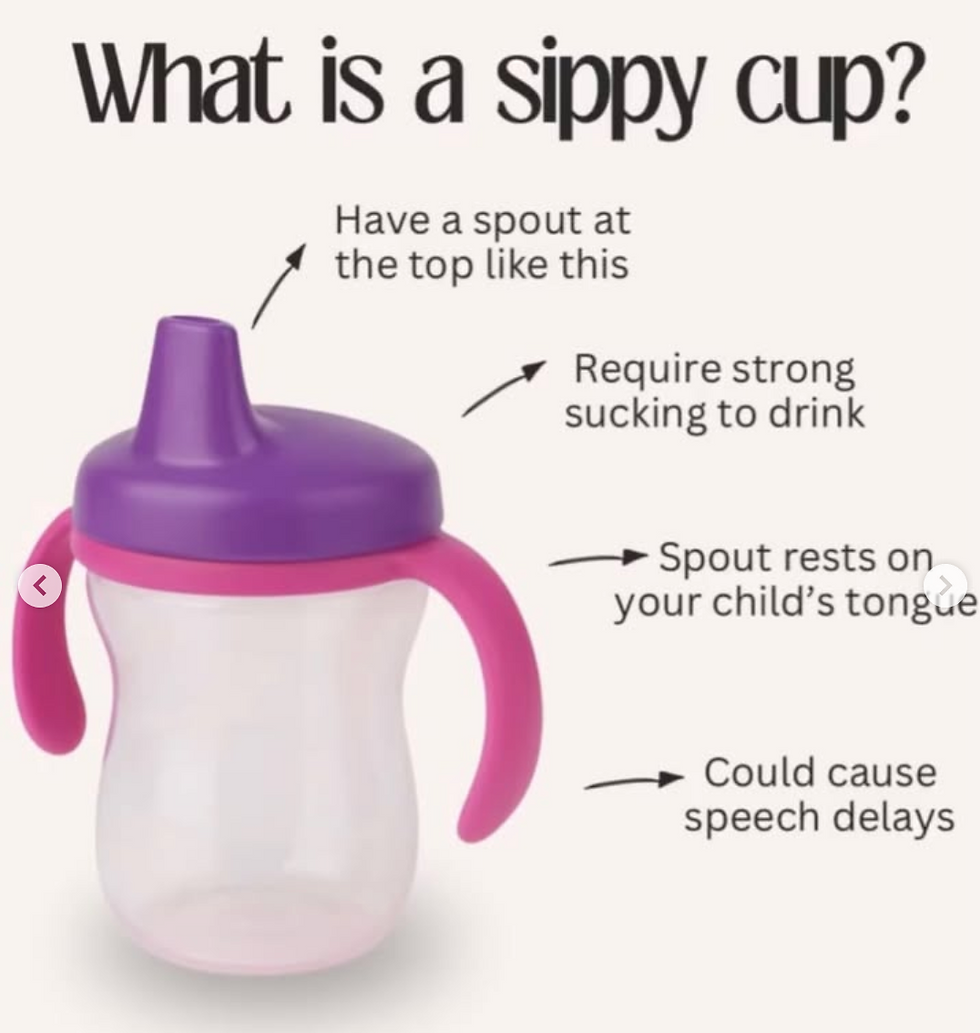
Sippy cup: Fine for travel or emergencies, but not as a daily cup. The spout encourages the same sucking motion as a bottle, which doesn't support oral development the way open and straw cups do.
The recommendation from paediatric OTs: Start with an open cup between 6–7.5 months, then add a straw cup. Aim to have bottles gone by 18 months — open and straw cups only after that.
10. How to Teach Your Baby to Drink from an Open Cup:
Using the 1-2 Method
Yes — babies can learn to drink from an open cup as early as 6 months. Here's exactly how to do it using the simple 1–2 method.
Why start with an open cup early?
Builds oral-motor control and coordination
Teaches babies how to regulate flow instead of relying on sucking
Supports independent drinking skills long term
Reduces prolonged dependence on bottles and sippy cups
The 1–2 Open Cup Method:
Fill the cup almost to the top — this prevents your baby from tipping it too far back
Gently bring the cup to your baby's lips
As they open their mouth, count "1… 2…"
Pause, then remove the cup
Repeat calmly and consistently
The verbal cue "1… 2… stop" helps your baby learn when to pause. Over time, with consistent practice, babies internalise this rhythm and automatically pause after a couple of sips — even without you counting.
Gagging or coughing can still happen sometimes — even adults cough when drinking. Close supervision is always important. But with time, practice, and patience, those moments become fewer and farther between.
Just like crawling, walking, or talking — drinking is a learned skill, not an instinct. It's not about perfection. It's about giving your baby repeated, calm opportunities to practise.
Watch how I taught my 6-month-old son to drink from an open cup in this tutorial video here:
11. How to Teach Your Baby to Drink from a Straw Cup
Teaching your baby to use a straw cup is a skill, not something they figure out overnight — and that's completely okay. Here are three things to keep in mind:
1. Timing matters, but there's no rush. The ideal window to introduce a straw cup is around 6–9 months, when babies are curious and learning new oral skills. Some babies get it in a day; others take weeks. Both are normal. Consistency matters more than speed.
2. Start with assisted learning. Use a soft silicone straw cup or trainer straw. Gently squeeze the cup so liquid comes up the straw and reaches your baby's mouth. Let them explore it during playtime, not only at meals. Model drinking from a straw yourself — babies love copying what they see.
3. Keep it low-pressure and routine-based. At this age, 1–2 sips is a win. Water at this stage is for practice, not primary hydration — breast milk or formula is still doing that job. Offer the straw cup daily, even if your baby just chews it, spills it, or plays with it. That's how habits form.
Bonus tip: Avoid switching cups too often. Familiarity helps learning. Once you find a cup that works, stick with it for a while.
Watch how to teach a 6-month-old to drink from an open cup in this tutorial video here:
12. The Salt Guide — Why No Salt Under 12 Months
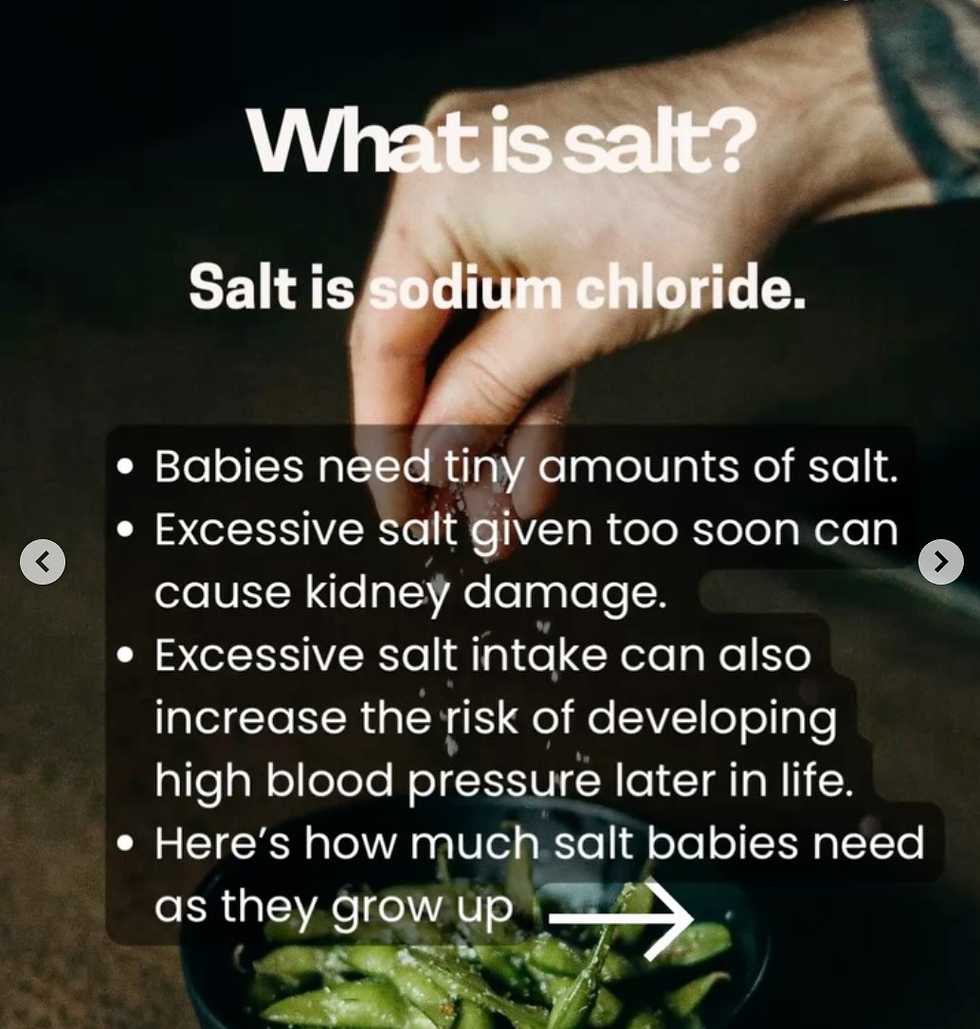
"Without salt, how will the baby eat food?"
If you've heard this — and if you're in a South Asian household, you almost certainly have — here's the truth: babies don't know the taste of salt. They can't miss what they've never had.
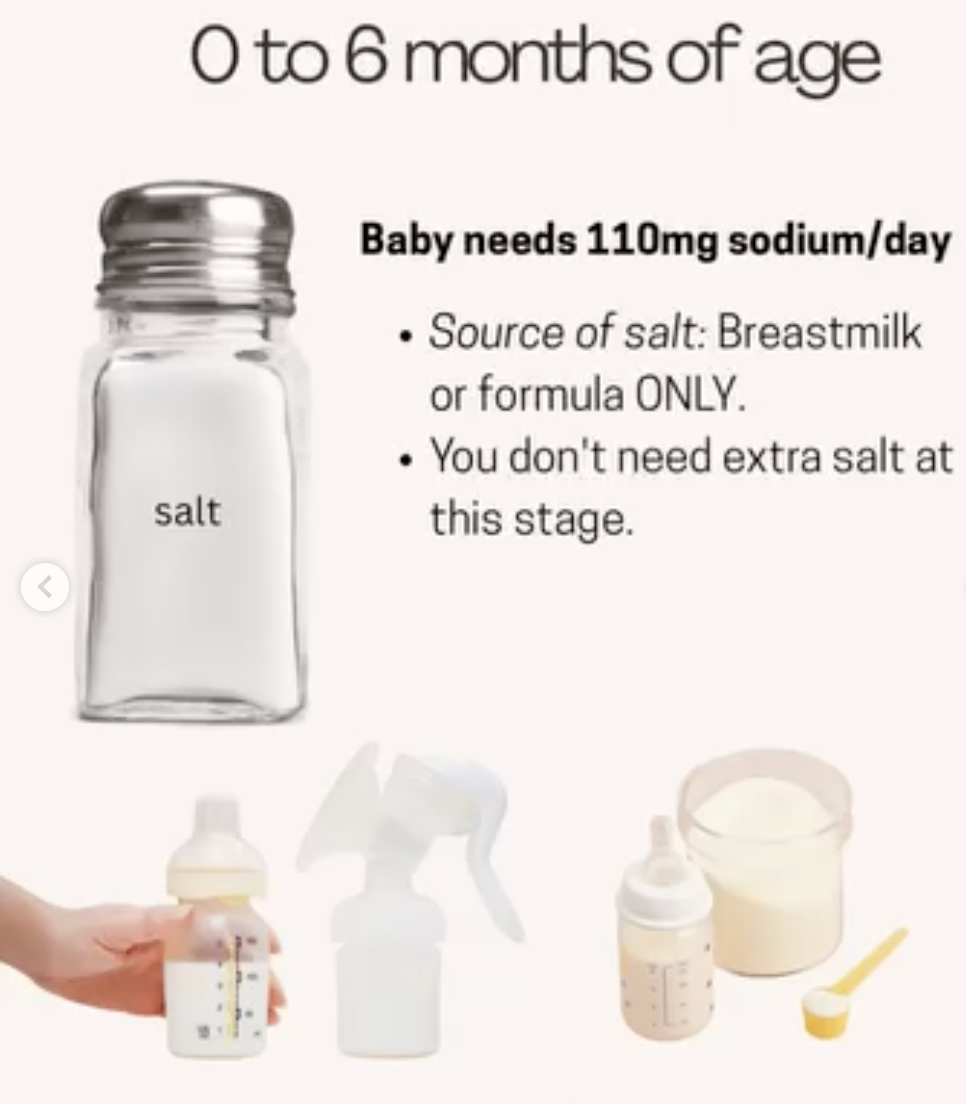
Current guidelines from the AAP, NIH, NHS, and IAP are all consistent on this:
Under 12 months: No added salt. Breast milk, formula, and whole foods already provide enough sodium for your baby's needs.
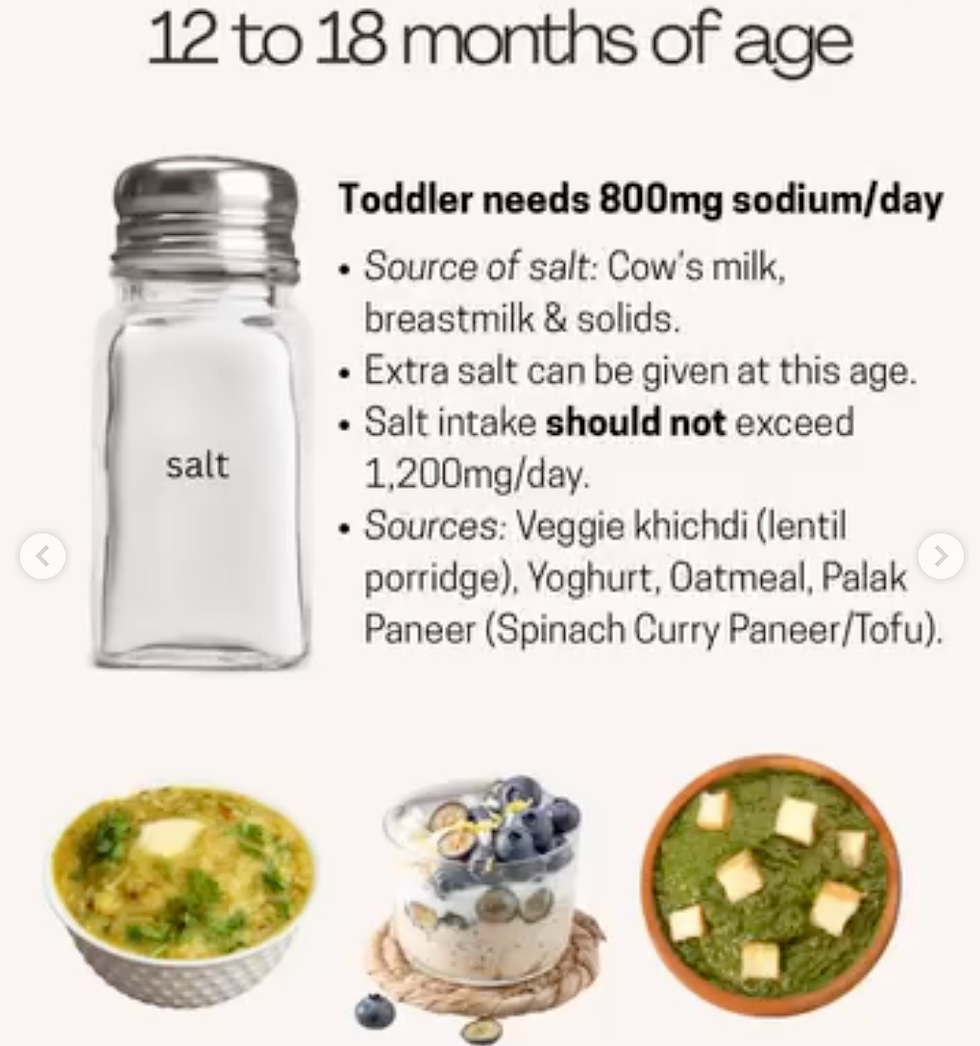
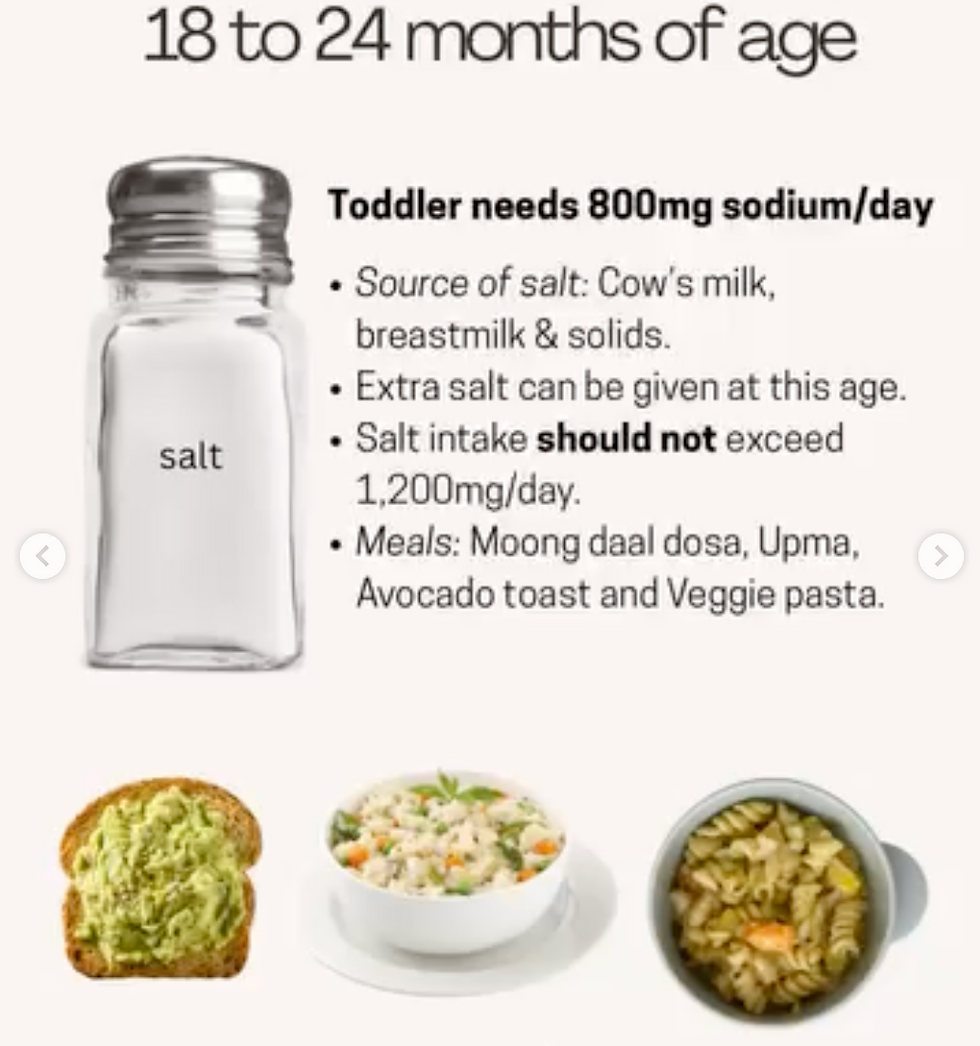
1–3 years: Around 800mg sodium per day (roughly ⅓ teaspoon of salt)
4–8 years: Around 1,000mg sodium per day
Teens and adults: No more than 2,300mg per day (1 teaspoon of salt)
Why does this matter so much?

Too much salt in early childhood can strain tiny kidneys, shape a lifelong preference for salty foods, and raise the risk of high blood pressure, kidney stones, heart disease, and osteoporosis later in life.
These aren't small risks — they're real, well-documented consequences of consistently oversalting food in childhood.
Watch out for hidden salt
The biggest culprits in Indian households:
Packaged noodles and instant soups
Store-bought broths and stock cubes
Processed snacks: biscuits, crackers, chips, namkeen
Cheese and condiments
Fruit juices and sweetened drinks
These pack far more sodium than you realise — and can quickly push even older children over safe limits.
One note on iodine: After 12 months, if you're using salt in family meals, choose iodised salt to support healthy thyroid function and growth.
How to add flavour without salt
Babies absolutely don't need salt for food to taste good. Safe and delicious alternatives:
Mild spices: hing (asafoetida), cumin, coriander powder, turmeric (haldi), ajwain (carom seeds)
Fresh herbs: coriander, dill, mint, rosemary, mint, basil
Aromatics: garlic, ginger
Acid: a squeeze of lemon or lime
Fat: ghee, butter, coconut milk — all add incredible flavour
13. The Allergen Guide — How to Introduce the Top 9 Allergens
One of the biggest fears parents have when starting solids is allergens. But here's what the latest research actually tells us: introducing allergens earlier — around 6 months — may actually reduce the risk of developing food allergies later. Delaying introduction doesn't protect your baby. In many cases, it does the opposite.
Paediatric and allergy organisations now support introducing common allergens between 6–7 months, once your baby has started solids and is tolerating a few foods.
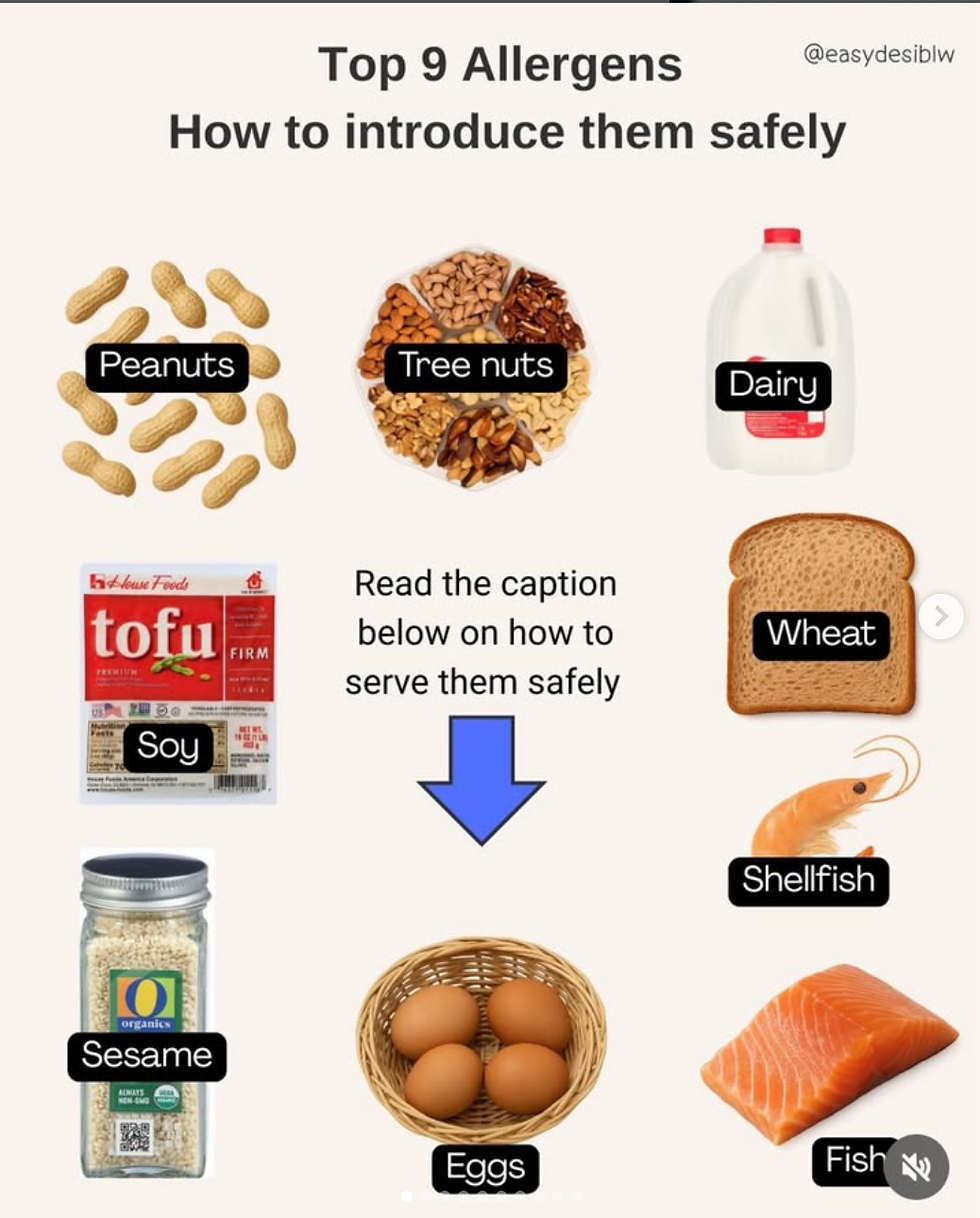
The Top 9 Allergens to Introduce
What You Need to Know
Egg yolk and egg white can be introduced together. There's no need to separate them — that's outdated advice.
The old 2–3 day wait between allergens is no longer medically required. That said, if spacing them out helps you feel more comfortable and confident, that is completely fine!
Feeding babies is about building confidence through consistency, not following rigid rules.
Once an allergen is tolerated, keep offering it regularly. Repeated exposure is what builds and maintains tolerance.
Always serve allergens in baby-safe forms:
Peanuts and tree nuts: thinned nut butter or powdered
Eggs: well cooked (scrambled, hard boiled, mixed into food)
Fish: flaked, boneless, well cooked
Wheat: soft bread, pasta, or roti
Sesame: tahini thinned with water, or ground sesame powder
Dairy: yogurt, cheese, or milk mixed into food
Allergen introduction doesn't have to be scary. With the right approach and repeated exposure, most babies tolerate them just fine.
Reactions to watch out for:
Mild to Moderate Reactions:
Skin: Hives, welts, or widespread rashes away from the mouth
Stomach: Mild vomiting, diarrhea, or stomach pain.
Note: A mild red ring or contact rash strictly around the mouth is usually just skin irritation from food acids and is not a true allergic reaction like when a baby eats pineapple.
Severe Reactions (Anaphylaxis):
Breathing: Difficulty breathing, wheezing, or repetitive coughing.
Swelling: Significant swelling of the lips, tongue, or throat.
Behavior/Appearance: Sudden, extreme lethargy, intense fussiness, or pale/floppy skin tone.
How to Introduce an Allergen Safely — A Simple Protocol
Starting allergens doesn't have to be stressful. Follow these four steps, and you'll feel confident every single time.
1. Start small: Offer about ¼ teaspoon of the new food and wait. You don't need to give a full serving on the first introduction — a tiny amount is enough to gauge how your baby responds.
2. Introduce one allergen at a time: Make sure the new food is the only new ingredient in your baby's meal that day. This way, if a reaction does occur, you know exactly what caused it without any guesswork.
3. Watch and observe: After feeding, keep an eye on your baby's skin — particularly the stomach and back — and listen to their breathing. Most reactions, if they occur, will appear within a couple of hours of eating.
4. Know your action plan before you need it: If you notice a mild reaction — a small rash, some redness, or mild fussiness — stop offering the food and call your paediatrician.
If your baby shows severe symptoms affecting more than one system at the same time — for example, difficulty breathing along with vomiting or swelling — call emergency services immediately. Knowing this in advance means you won't panic in the moment.
The most important thing to remember: most babies tolerate allergens just fine. Going in prepared simply means you're ready for any outcome — which makes the whole experience feel far less scary than it sounds.
For my complete step-by-step allergen introduction guide — including what to watch for and what to do if your baby reacts — read the full guide here.
14. The Constipation Guide:
What to Do When Your Baby Can't Poop
Constipation when starting solids is incredibly common and completely normal — almost every baby goes through it. When your baby transitions from an all-liquid diet to solid foods, their digestive system needs time to adjust.
Signs your baby might be constipated:
Fewer bowel movements than usual
Hard, dry, or pellet-like stools
Straining or discomfort when passing stools
A hard, distended tummy
The good news is that in most cases, the right foods make a significant difference quickly.
Foods That Help with Constipation in Babies
The general rule: foods high in fibre and water content help move things along.
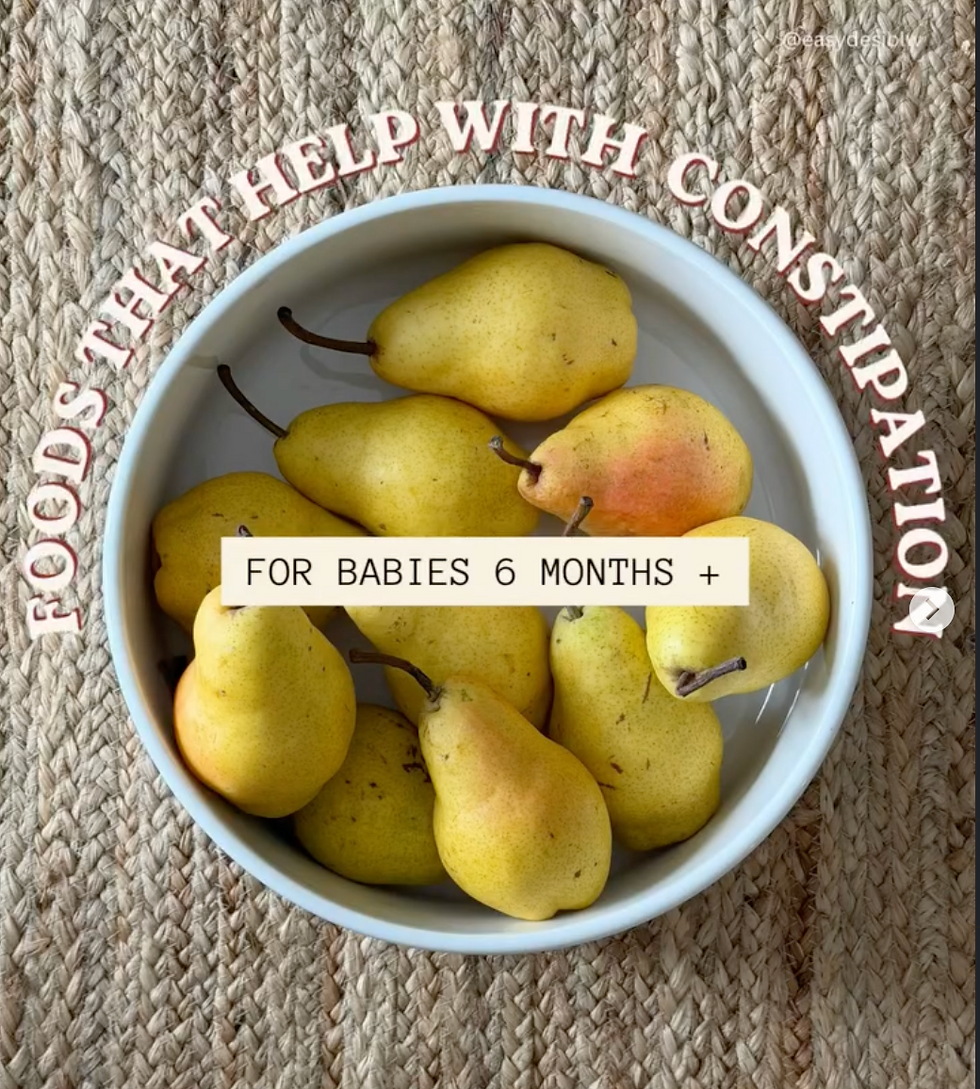
Here are the best options:
Fruits: Prunes (the gold standard — incredibly effective), pears, plums, peaches, kiwi, mango
Vegetables: Broccoli, peas, sweet potato, spinach, beans
Grains: Oatmeal, barley, whole wheat
Hydration: Water (as age-appropriate), watermelon, cucumber, soups
Foods to reduce when your baby is constipated: bananas (ripe), rice, carrots, and dairy — these tend to be binding.
For the full list of 21 foods that help with constipation in babies and toddlers, including how to serve each one: read the complete guide here.
15. How to Teach Your Baby to Self-Feed
"How do I teach my baby to self-feed?" is one of the questions I get asked most often. And the answer is simpler than you think. You can start right when you start solids - at 6 months of age.
Yes, that early!
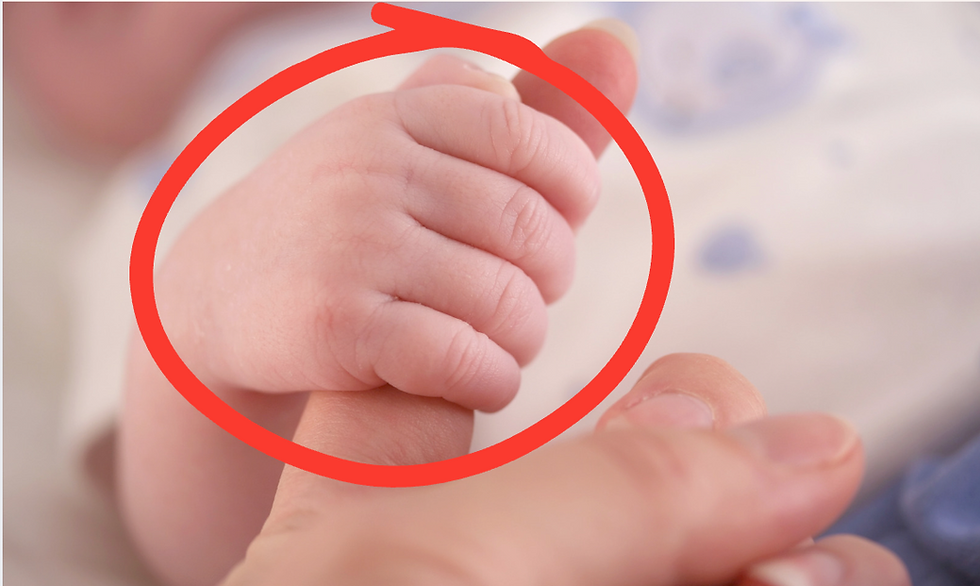
Babies are naturally curious at that age and start to grab toys, things, utensils - whatever they can get a hold of at that age. As parents, you want to capitalize on that stage and give them lots of opportunities to grab food, plates, cups etc.
Within a few weeks, if done consistently, you should see a huge difference!
At 6 months babies start developing the palmer grasp, which is what my son is doing in the video below. Give them age-appropriate utensils to encourage that grip!
It's not about teaching. It's about letting them practice!
Step 1: Practice, practice, practice
Every time your baby eats, allow them to self-feed, hold a spoon, drink water from an open cup. Even if they don't use it. Even if they just play with it!
You can offer utensils during non-meal times too, just to build familiarity. Babies learn through repetition and consistency — not instruction.
Step 2: Same place, same time
Routine matters more than most parents realise. When babies eat in the same spot at consistent times, they feel safe, comfortable, and ready to engage. That security naturally encourages self-feeding. A high chair or supportive seat at the table, at roughly the same times each day, makes a real difference.
Step 3: Stop interrupting and correcting
This is the big one. If they're holding the spoon wrong — let them. I know as parents our first instinct is to immediately jump in and help them - but that's not how kids learn. If they don't make "mistakes," they will not learn what the right way of doing this is. This is true, not just for eating, but crawling, walking, talking, reading, driving, etc. You HAVE to let them figure it out. They are smarter than you think! :)
If they're chewing on the wrong end of the spoon, that's completely normal at 6–7 months. Between 6–7 months, babies are still figuring out what eating even means, how to hold utensils, and how to coordinate movement. Constant correction breaks their concentration and chips away at their confidence.
Around 7–8 months, you can start gently preloading the spoon, turning it the right way once or twice, or demonstrating — and then stepping back again.
Self-feeding is built on confidence. Your baby needs to feel "I can do this." And they can — if you give them the space.
16. Utensils and Equipment:
What You Actually Need to Get Started
Good news: you don't need much. Here's the honest list of what actually makes a difference, especially if you're starting solids, whether or not you're doing baby-led weaning.
A variety of spoons:
Start with pre-spoons, textured chewers, and silicone feeder
spoons. Each one helps your baby explore different grips and feels great on teething gums.
A silicone suction plate:
Divided sections let you offer a variety of foods at once (yogurt, fruit, vegetables, grains). The suction base means it sticks to the table — which dramatically reduces surprise plate-flipping mid-meal.
An open cup:
Not a sippy cup — an open cup. For all the reasons covered in the water and cup section above.
A silicone bowl:
Deep enough to avoid spills, shallow enough for your baby to try scooping independently. A bowl with a suction base is a bonus! So if baby tries to flip the bowl or plate onto the floor - it won't work!
A supportive seat:
An Upseat, a high chair, or a booster seat strapped securely to a dining chair — whatever works for your space. The key is that your baby is sitting upright with feet supported, which is both the safest position for eating and the most comfortable for them to engage with food.
One thing I don't recommend for starting: traditional steel plates and spoons:
They have sharper edges and don't work well for teething babies — they can hurt sensitive gums and cause more spills. Wait until your baby has a solid eating rhythm (usually around 10-12 months) before switching over, especially if using steel is culturally important to your family.
17. Feeding and Sleep:
Why They're More Connected Than You Think
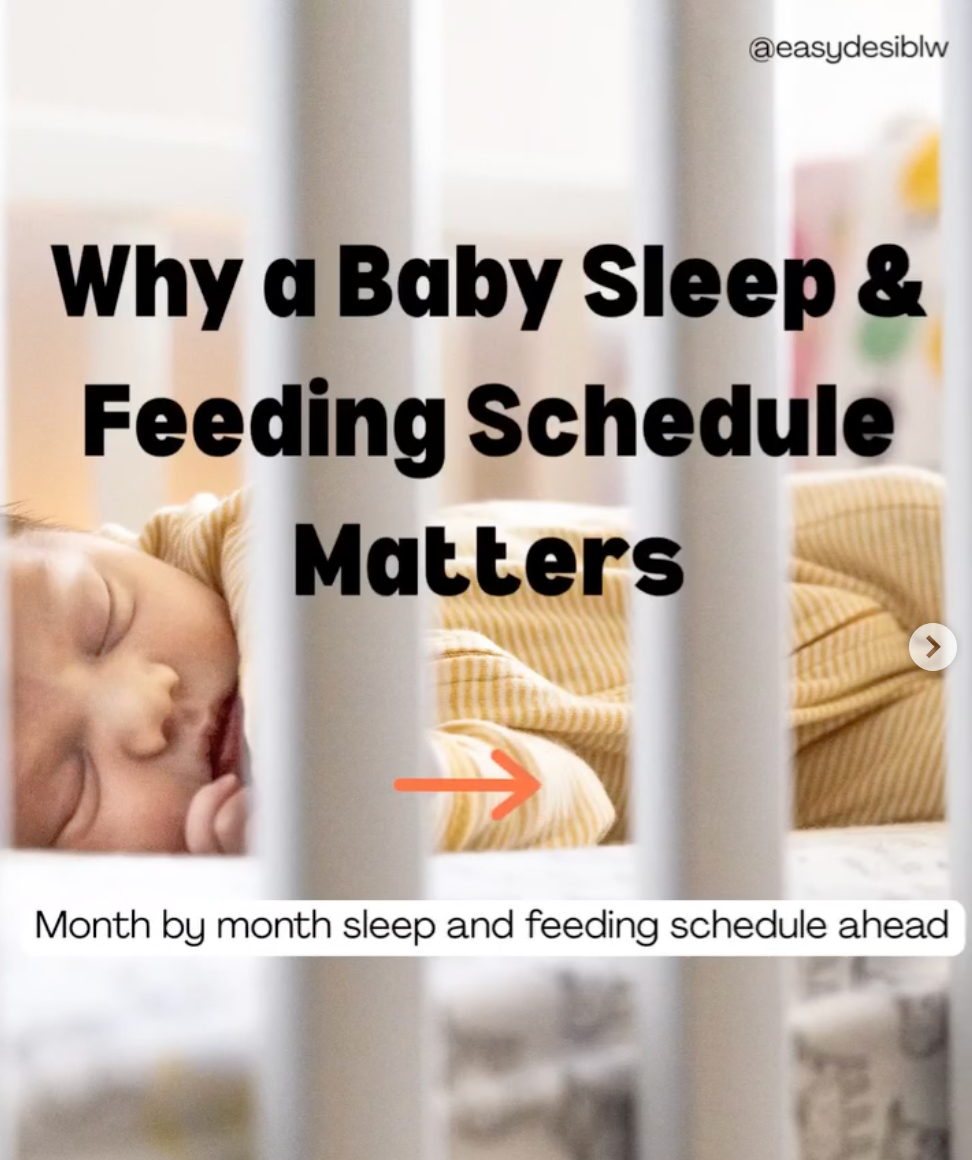
Here's something that surprises a lot of parents: sleep and eating are deeply connected — and when one is off, the other usually is too.
Babies don't just "outgrow" bad sleep or picky eating. 9 times out of 10, they're linked. When your baby's body knows what to expect - when to rest, when to eat - everything falls into rhythm.
Appetite evens out.
Mood lifts.
Growth follows.
Research from the AAP, the Sleep Foundation, the IAP, and the NHS all points to the same conclusion: babies who get enough consistent sleep have steadier appetites, stronger growth, and better cognitive development. Sleep isn't just rest. It's nutrition.
When naps and meals happen around the same times each day, your baby's hunger hormones regulate, digestion improves, and fussiness drops. You don't have to be perfect about this — even 90% consistency is enough to see a real difference in your baby's eating behaviour.
General rhythm to aim for (adjust to your baby's cues):
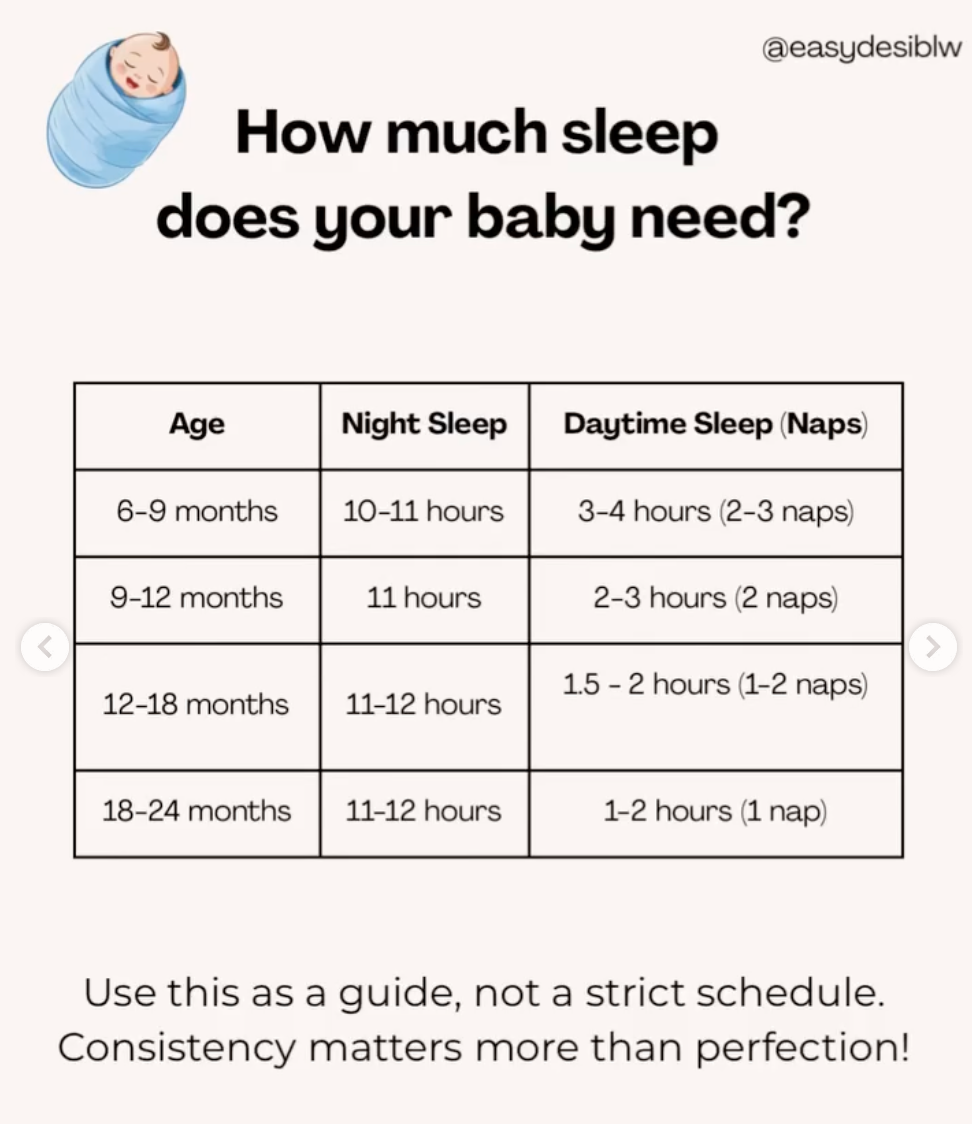
For detailed breakdowns of age by age sleeping and feeding routines click here.
Consistency matters more than perfection. Build the rhythm, hold it loosely, and trust that your baby's body will find its way.
18. Frequently Asked Questions
When should I start solids for my baby?
Around 6 months, once your baby shows all three signs of developmental readiness: sitting with minimal support, losing the tongue-thrust reflex, and showing interest in food.
Should I start with purées or finger foods?
You can start with either, or both at the same time. There is no developmental reason to do purées before finger foods. What matters is that food is soft enough to squish between your fingers.
How much should my 6-month-old eat?
Very little! And that's completely normal. A few teaspoons to a tablespoon at a sitting is plenty. The goal at 6 months is exploration and exposure, not quantity. Start with 1 meal a day! Breastmilk or formula is still the main source of nutrition.
Can I give my baby water at 6 months?
Yes! You should absolutely start water when starting solids. Small sips (1–3 oz per day) from an open cup are fine once solids begin. Never give large amounts of water to babies under 12 months, as it can dilute the nutrients from milk.
Why is no salt recommended under 12 months?
Babies' kidneys are not mature enough to handle excess sodium. Breast milk, formula, and whole foods already provide all the sodium your baby needs. Adding salt is unnecessary and potentially harmful.
My baby gags every time I offer food. Should I stop?
Gagging is a normal, protective reflex that helps babies learn to manage food in their mouth safely. It is not the same as choking. Stay calm, let your baby work through it, and keep offering food consistently.
When should I introduce allergens?
Around 6–7 months, once your baby has started solids and is tolerating a few foods. Early introduction is now recommended by most paediatric organisations as it may reduce the risk of developing allergies.
Is Cerelac okay or should I make homemade baby food?
Both are fine. Cerelac is iron-fortified and convenient, which is genuinely useful. Homemade food gives you more control over ingredients and flavours. Many parents use a combination of both — and that's a completely valid approach.
My baby only eats 2–3 spoonfuls and then refuses. Is that normal?
Completely normal, especially in the early weeks of starting solids. Their stomachs are tiny and milk is still their primary nutrition. Keep offering consistently without pressure, and portions will naturally increase over time.
How do I know if my baby is getting enough iron?
Offer an iron-rich food at every meal and pair it with Vitamin C to boost absorption. If you're concerned about deficiency, speak to your paediatrician — a simple blood test can confirm iron levels.
Want Personalised Support?
My 1:1 consultation is a 60-minute Zoom session where we take a deep dive into your babies’ feeding, nutrition, growth, routines, and any concerns you may have.
Since every child is different, we’ll discuss their entire routine and lifestyle individually and create recommendations tailored to their specific needs.
Some of the topics we can cover include:
Transitioning from breastmilk/formula after 12 months
Meal schedules and routines
Picky eating and food refusal
Self-feeding and texture progression
Weight gain and growth concerns
Iron intake and balanced nutrition
Milk intake and bottle weaning
Allergen introduction
Constipation and digestion
Daycare/travel meal planning
* Vegetarian and non-vegetarian meal planning
Following the consultation, you’ll receive:
✅ A personalized action plan
✅ A customized 4-week meal plan for your child
✅ Practical meal and snack ideas tailored to your family’s food preferences and lifestyle
✅ Recommendations specific to any feeding challenges you’re currently facing
I look forward to working with you and your little one!


